

 ไทย
ไทย Français
 Русский
 Deutsch
 Español
 中文
中文 한국어
한국어 日本語
日本語Teaching Your Dog to Swim Safely in Thailand
Keep your canine companion safe in the water. From tropical beaches to Bangkok dog pools, here is how to teach your dog to swim safely in Thailand.
Boba
18 April 2026 · 5 min read
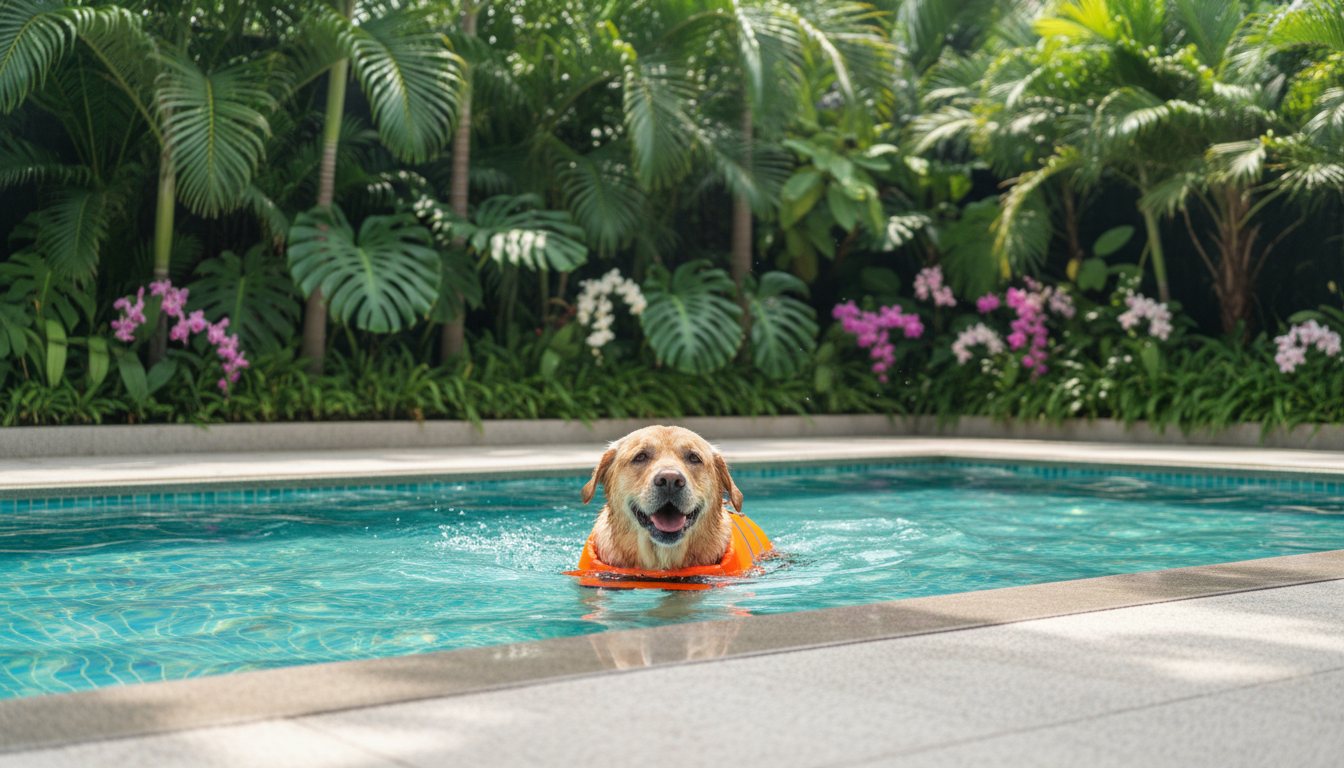
Thailand's tropical climate means we are constantly looking for ways to keep our dogs cool. Whether you are living in a bustling Bangkok condo with access to a pet-friendly pool, or spending weekends on the sandy beaches of Hua Hin or Chonburi, swimming is a fantastic, low-impact exercise for dogs. However, just because the weather is hot does not mean every dog is ready to dive straight into the deep end. Teaching your dog to swim safely requires patience, the right gear, and an understanding of the unique aquatic environments found across Thailand.
Not All Breeds Are Born Swimmers
There is a common myth that all dogs possess an instinctual ability to swim. While some breeds are natural water babies, others struggle to stay afloat. Retrievers, spaniels, and setters generally have water-resistant coats and webbed paws designed for swimming. On the other hand, brachycephalic (flat-faced) breeds like Pugs, French Bulldogs, and Shih Tzus have a very difficult time. Their short airways make it hard to keep their noses above water, and their heavy chests can cause them to sink.
Even if your dog is a natural swimmer, never force them into the water. Start in a quiet, shallow area where they can touch the ground. Walk in with them, offering plenty of praise and treats. Let them explore at their own pace. If they show signs of panic—such as wide eyes, frantic splashing, or trying to climb on top of you—gently guide them back to dry land and try again another day.
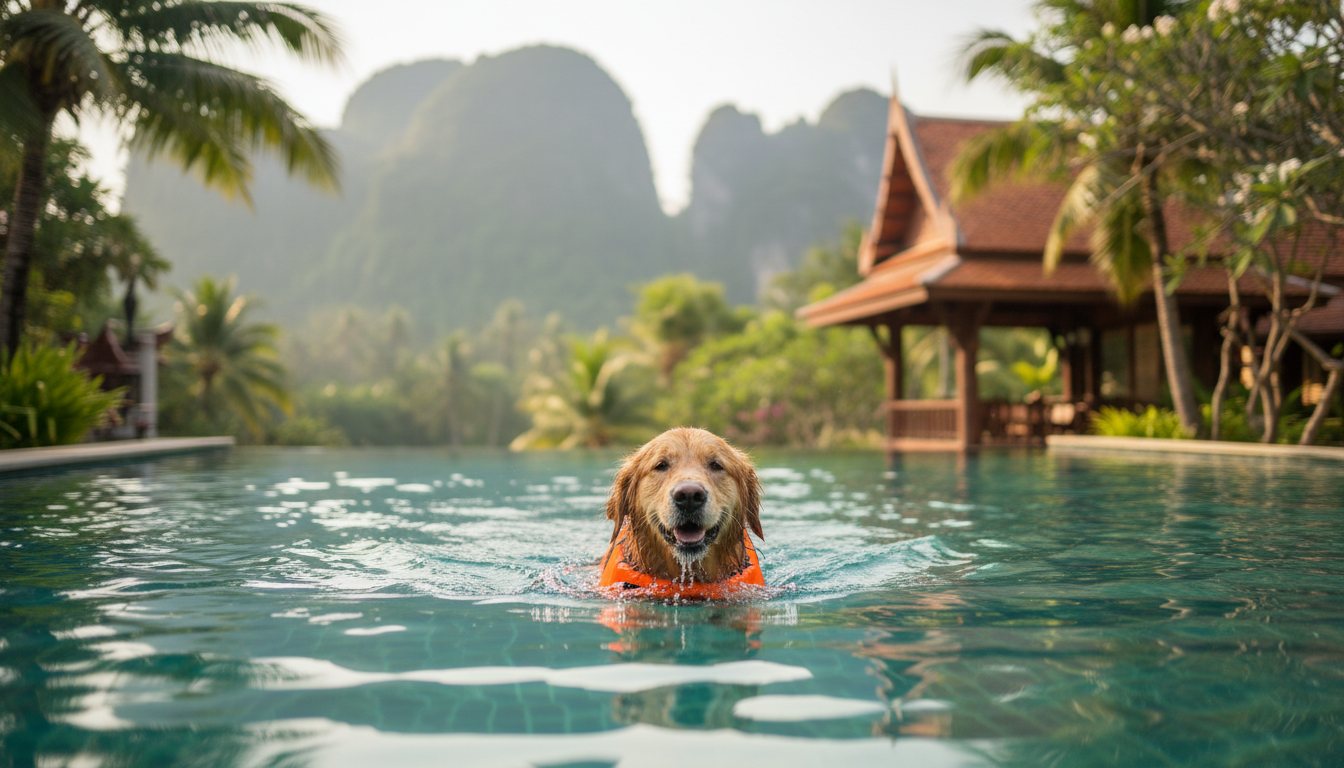
The Essential Gear: Why Life Jackets Matter
A high-quality canine life jacket is the single most important safety investment you can make for your pet. Even excellent swimmers can tire quickly, get a cramp, or panic in open water. For flat-faced breeds or dogs with heavy bodies and short legs, a life jacket is non-negotiable.
When shopping for a life jacket in Thailand's pet shops or online, look for these key features:
- A sturdy rescue handle on the back, which allows you to quickly lift your dog out of the water in an emergency.
- Bright colors and reflective strips so you can easily spot your dog, even in low-light conditions or murky water.
- An under-chin float to help keep your dog’s head and nose above the surface.
- Adjustable straps and quick-release buckles to ensure a snug, comfortable fit that does not restrict their movement.
Before heading to the water, let your dog wear the life jacket around the house. Pair it with positive reinforcement, like treats and playtime, so they associate the gear with fun experiences.
Chlorine vs. Saltwater: Choosing Your Swim Spot
Thailand offers a variety of swimming spots, from dedicated canine pools in Bangkok and Chiang Mai to the open ocean along our beautiful coastlines. Each environment comes with its own set of rules and safety considerations.
Dedicated Dog Pools: Private pet pools are a wonderful, controlled environment for beginners. Many facilities offer hydrotherapy and have professional staff on hand to assist. However, these pools use chlorine or salt-chlorination systems to keep the water clean. While safe in moderation, chlorinated water can dry out your dog's skin and coat. Ensure your dog does not drink the pool water, as it can cause stomach upset.
The Sea: Taking your dog to the beach in places like Phuket or Samui is a wonderful experience, but the ocean presents natural hazards. Always watch out for strong undertows and rip currents, which can sweep a dog out to sea in seconds. During the monsoon seasons, keep a close eye on warning flags on the beach.
Another major concern in Thai waters is jellyfish. Box jellyfish and other stinging species are common in certain regions, particularly during the rainy season. If your dog is stung, seek immediate veterinary care. Before heading to any public beach, check local regulations regarding pets, as rules can change depending on the municipality and the season.
Post-Swim Care: Rinsing and Drying
The fun does not end when your dog steps out of the water. Post-swim grooming is essential to protect your dog’s skin and coat from the harsh tropical elements. Both chlorine from pools and salt from the sea can strip the natural oils from your dog's fur, leading to dry, itchy skin and hot spots.
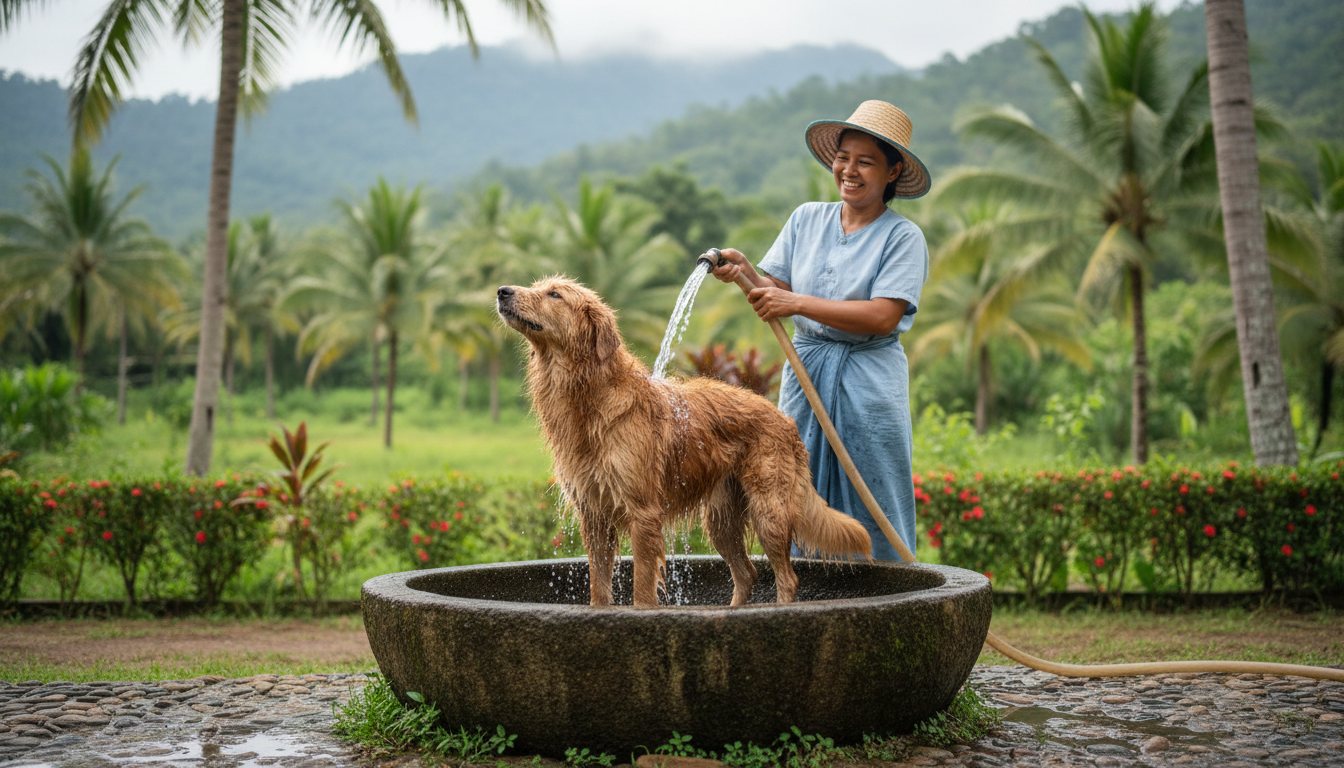
As soon as your dog is done swimming, rinse them thoroughly with clean, fresh water. Pay special attention to the underbelly, armpits, and groin area, where salt, sand, or pool chemicals can trap moisture and cause chafing. If you are at a public beach, carry a couple of large bottles of tap water in your car specifically for this purpose. Once rinsed, dry your dog thoroughly with a clean towel. Leaving a dog wet in Thailand's humid climate is a recipe for fungal infections.
Ear Care: Preventing Swinner's Ear
One of the most common health issues Thai vets see after a dog goes swimming is otitis externa, or ear infections. Dogs with floppy ears, such as Beagles, Cocker Spaniels, and Poodles, are particularly prone to this. When water gets trapped inside the warm, dark ear canal, it creates the perfect breeding ground for bacteria and yeast, especially in Thailand’s high humidity.
To prevent ear infections, follow these steps:
- Avoid spraying water directly into your dog's face or ears during the post-swim rinse.
- Gently dry the outer ear with a soft towel immediately after they get out of the water.
- Use a vet-approved ear drying solution designed for dogs. Gently squirt the solution into the ear canal, massage the base of the ear, and let your dog shake their head. Wipe away any excess moisture with a clean cotton ball—never use cotton swabs inside the ear canal.
If you notice your dog shaking their head excessively, scratching at their ears, or if you detect a foul odor or redness, consult your veterinarian right away. They can diagnose the issue and prescribe the correct medication.
This guide is general information, not veterinary or legal advice. Rules, fees and requirements change: check with your vet or the relevant authority before you act.
Written by
Boba
Part of the Wagdee community of pet lovers in Thailand.
Keep reading
 Training & behaviour
30 April 2026 · 4 min read
Leash Training for Busy Thai Sidewalks
Master the art of walking your dog on Thailand's bustling streets, from navigating soi dogs and motorbikes to keeping cool in the tropical heat.
 Training & behaviour
26 April 2026 · 5 min read
Puppy Socialisation in Thailand: Cafés, Parks, and Meetups
Discover how to safely socialise your puppy in Thailand. Learn about safe exposure, dog-friendly cafés, park walks, and community meetups to raise a confident dog.
 Training & behaviour
22 April 2026 · 4 min read
Calming Pet Anxiety During Thai Storms and Fireworks
Help your dog or cat stay calm during Thailand's monsoon season, Loy Krathong, and New Year fireworks with our practical guide to managing pet noise anxiety.