

 ไทย
ไทย Français
 Русский
 Deutsch
 Español
 中文
中文 한국어
한국어 日本語
日本語Calming Pet Anxiety During Thai Storms and Fireworks
Help your dog or cat stay calm during Thailand's monsoon season, Loy Krathong, and New Year fireworks with our practical guide to managing pet noise anxiety.
Boba
22 April 2026 · 4 min read
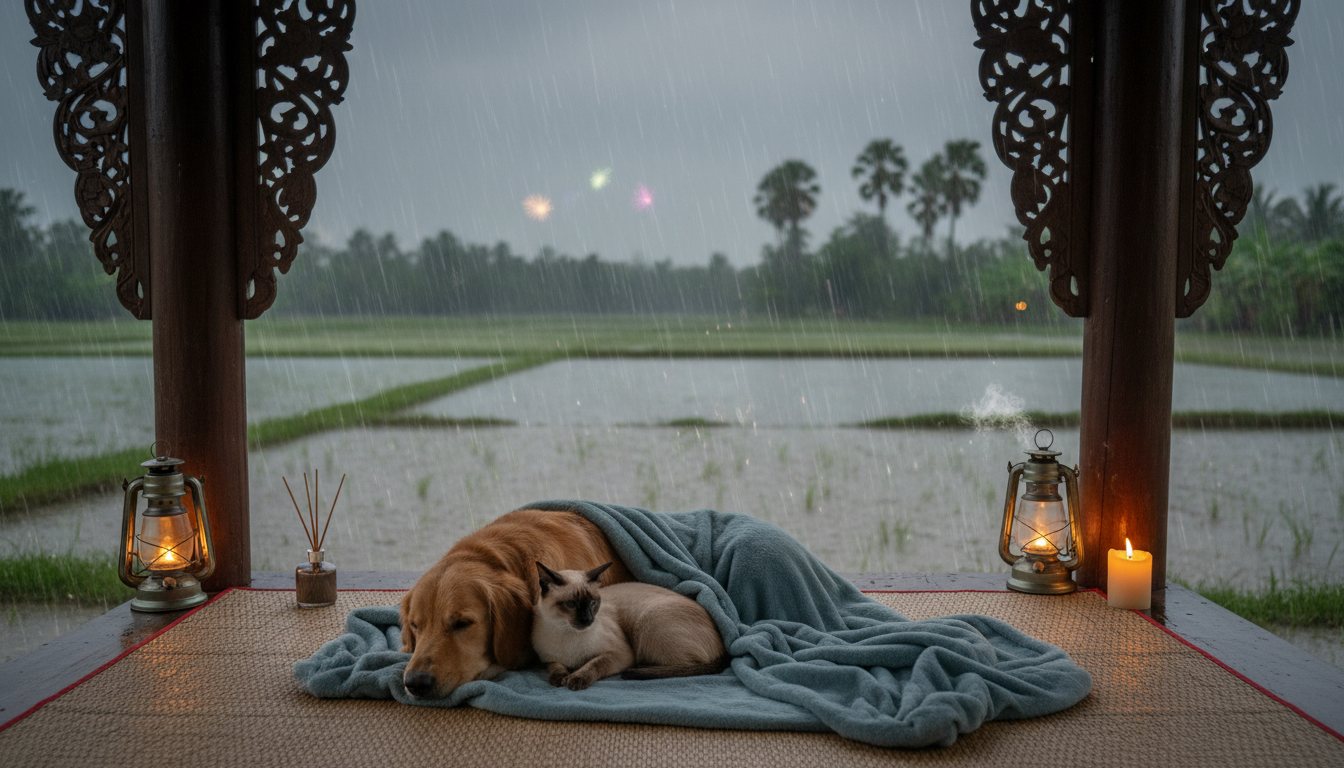
In Thailand, our pets experience a unique calendar of sensory challenges. From the sudden, house-shaking thunderclaps of the southwest monsoon to the dazzling but deafening fireworks of Loy Krathong and New Year’s Eve, our dogs and cats often find themselves in a state of high alert. Whether you live in a bustling Bangkok high-rise where sound bounces off concrete towers, or a quiet villa in Phuket where storms roll in violently from the Andaman Sea, helping your pet navigate these loud events is a crucial part of responsible pet ownership. Understanding their fear and having a practical plan can transform a night of terror into a manageable, calm evening for your entire household.
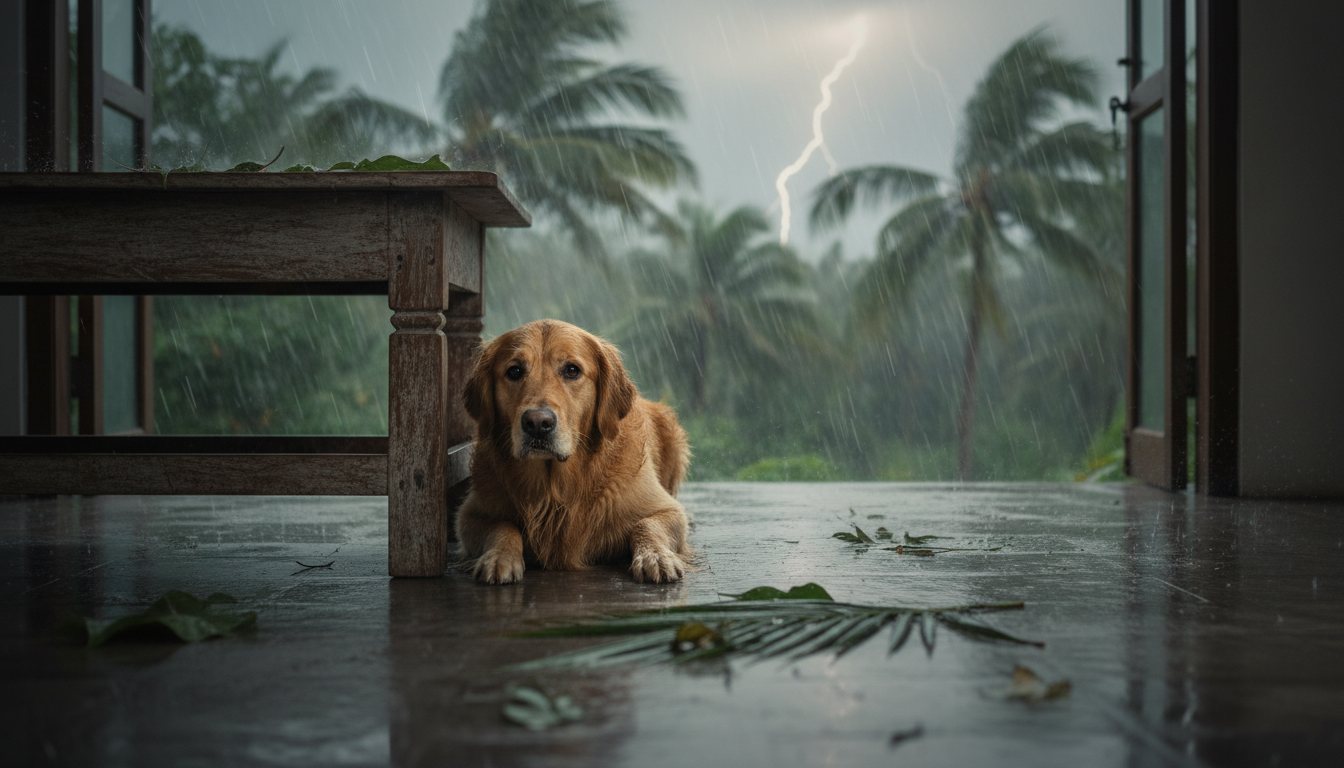
Decoding the Thai Calendar of Loud Events
To protect your pets, you first need to anticipate when the loudest disruptions will occur. In Thailand, the rainy season typically runs from May to October, bringing unpredictable, torrential downpours and lightning strikes that can terrify animals. Following the rains, the dry season brings cultural celebrations.
Loy Krathong, usually falling in November, is famous for its beautiful river floats, but it is also accompanied by firecrackers and fireworks in many urban areas. This is quickly followed by New Year's Eve, where major cities like Bangkok, Chiang Mai, and Pattaya erupt in massive, prolonged firework displays. Marking these dates on your calendar allows you to prepare your home and your pet well in advance, rather than reacting in a panic when the first explosion sounds.
Creating a Secure Indoor Sanctuary
When the noise begins, your pet’s natural instinct is to flee or hide. In a typical Thai home—often featuring tiled floors, large windows, or open-air Thai-style kitchens—sound can echo loudly, magnifying their fear. Your first step should be to establish a designated safe zone.
- Choose an interior room: Select a room with the fewest windows, such as a walk-in closet, a hallway, or an air-conditioned bathroom.
- Block out the sights and sounds: Close all windows, pull heavy curtains shut, and turn on the air conditioning to help muffle the exterior noise.
- Provide familiar comforts: Place their favorite bed, blankets, and a few of their preferred toys inside the space. An unwashed t-shirt carrying your scent can also provide immense comfort.
- Keep them indoors: Never leave your pet outside on the balcony, in the garden, or in an open carport during a storm or festive holiday. A panicked dog can easily leap over a high wall, and a frightened cat can squeeze through tiny gaps in security screens, leading to lost pets.
Long-Term Desensitisation Techniques
Calming a pet during a crisis is essential, but training them to tolerate loud noises over time is the ultimate goal. Desensitisation involves gradually exposing your pet to low levels of the sounds they fear, in a controlled and positive environment.
Start by playing high-quality recordings of thunder or fireworks at an incredibly low volume while your pet is eating, playing, or receiving treats. The key is to keep the volume so low that your pet notices the sound but does not show signs of anxiety.
Over several weeks, very slowly increase the volume by tiny increments during your training sessions. If your pet shows any signs of distress—such as panting, pacing, or pinning their ears back—you have moved too fast. Lower the volume immediately and try again another day. This process requires patience, but it can significantly reduce their baseline fear over time.
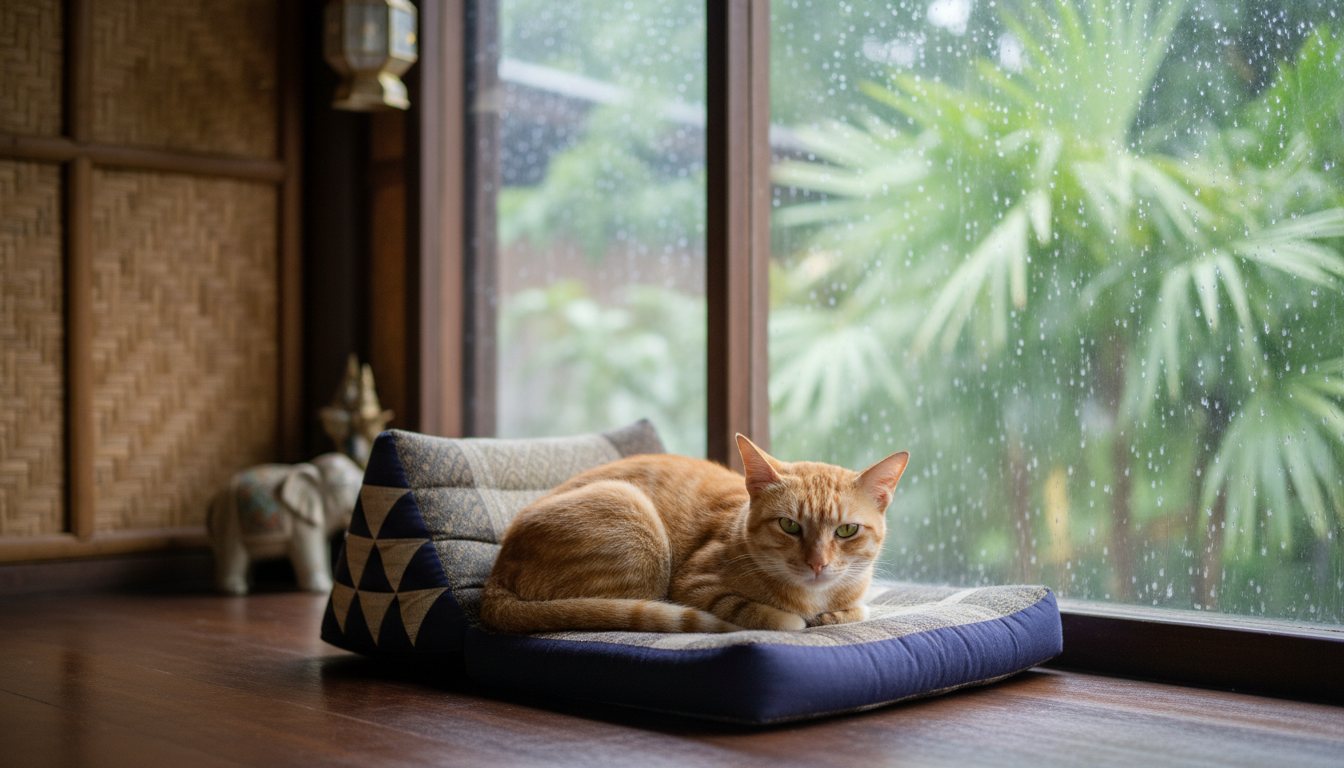
Real-Time Strategies for Stressful Nights
When a storm hits or the New Year countdown begins, how you behave plays a massive role in how your pet reacts. Animals are highly sensitive to human emotions and can easily pick up on your anxiety.
Keep your own demeanor calm, quiet, and cheerful. Continue with your normal household routines as much as possible to show your pet that there is no cause for alarm. If your dog or cat seeks your comfort, provide gentle, reassuring physical contact, but avoid over-compensating with frantic coddling, which can sometimes reinforce their belief that something is wrong.
You can also use sound masking to your advantage. Turn on a television, play calming classical music, or run a white noise machine to help drown out the sharp cracks of fireworks. Distraction is another powerful tool. Offer your dog a long-lasting chew toy or a puzzle feeder stuffed with wet food. For cats, a new cardboard box or a feather toy can help redirect their focus away from the noise outside.
Knowing When to Consult Your Veterinarian
For some pets, behavioral training and environmental changes are not enough. Severe noise phobia can cause extreme distress, leading to self-injury, destructive behavior, or severe health complications, particularly in older animals or those with pre-existing heart conditions.
If your pet trembles uncontrollably, drools excessively, attempts to escape frantically, or becomes destructive during loud events, it is time to seek professional veterinary help. A registered veterinarian in Thailand can assess your pet’s physical health and discuss medical options, which may include short-acting situational anxiety medications or long-term therapeutic plans.
Never administer human medications or leftover veterinary drugs without explicit professional guidance, as dosages vary wildly and some human drugs are highly toxic to pets. When looking for a qualified clinic, you can consult local veterinary directories or check registration details with the Department of Livestock Development or the Veterinary Council of Thailand to ensure you are receiving care from a licensed professional. Your vet will help you tailor a safe, effective plan to keep your companion calm and healthy through every season.
This guide is general information, not veterinary or legal advice. Rules, fees and requirements change: check with your vet or the relevant authority before you act.
Written by
Boba
Part of the Wagdee community of pet lovers in Thailand.
Keep reading
 Training & behaviour
30 April 2026 · 4 min read
Leash Training for Busy Thai Sidewalks
Master the art of walking your dog on Thailand's bustling streets, from navigating soi dogs and motorbikes to keeping cool in the tropical heat.
 Training & behaviour
26 April 2026 · 5 min read
Puppy Socialisation in Thailand: Cafés, Parks, and Meetups
Discover how to safely socialise your puppy in Thailand. Learn about safe exposure, dog-friendly cafés, park walks, and community meetups to raise a confident dog.
 Training & behaviour
18 April 2026 · 5 min read
Teaching Your Dog to Swim Safely in Thailand
Keep your canine companion safe in the water. From tropical beaches to Bangkok dog pools, here is how to teach your dog to swim safely in Thailand.