

 ไทย
ไทย Français
 Русский
 Deutsch
 Español
 中文
中文 한국어
한국어 日本語
日本語Leash Training for Busy Thai Sidewalks
Master the art of walking your dog on Thailand's bustling streets, from navigating soi dogs and motorbikes to keeping cool in the tropical heat.
Boba
30 April 2026 · 4 min read
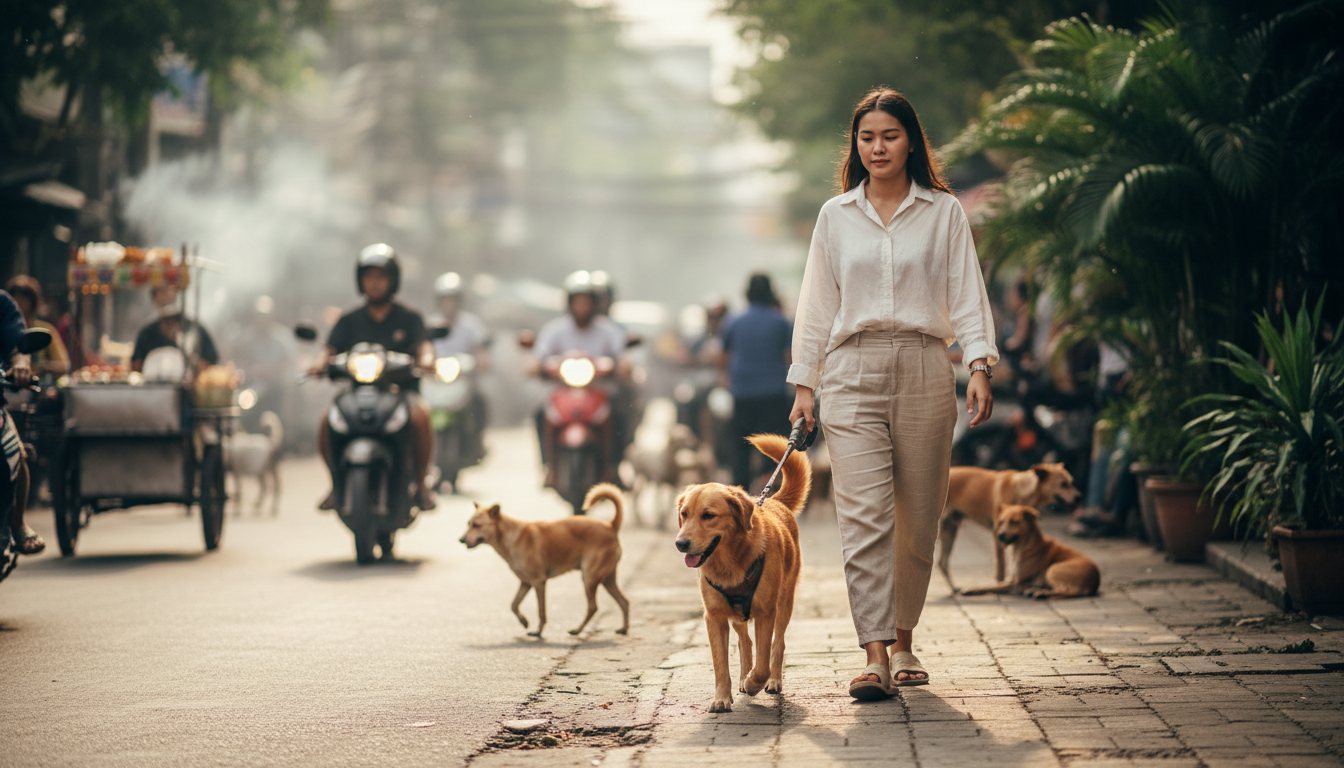
Walking a dog in Thailand is rarely a simple stroll in the park. Step outside your gate in Bangkok, Chiang Mai, or Phuket, and you are instantly greeted by a sensory explosion. The sizzle of grilled pork from a roadside cart, the sudden roar of a motorbike bypassing traffic on the pavement, uneven concrete slabs hiding puddles of water, and the local community of soi dogs watching from the shade. For a dog, this environment is both a playground of irresistible scents and a minefield of potential triggers. Teaching your dog to walk calmly on a loose leash under these conditions isn't just about good manners—it is a vital safety skill.
The Gear: Why Harnesses Win on Thai Streets
Before you even step outside, you need the right equipment. On busy Thai sidewalks, a standard collar is rarely enough and can even be dangerous. If your dog suddenly lunges toward a stray cat or bolts in fear from a backfiring tuk-tuk, a collar puts immense pressure on their delicate trachea.
- Y-shaped harnesses: Look for a harness that allows free shoulder movement and forms a 'Y' shape across the chest. This prevents joint issues and distributes pressure evenly.
- Front-clip options: If your dog is a strong puller, a harness with a leash attachment point on the chest (front-clip) is a game-changer. When they pull, the tension gently redirects their body back toward you.
- Fixed-length leashes: Avoid retractable leashes at all costs on city streets. They offer very little control, can easily snap, and can wrap around pedestrians, street vendors' tables, or motorbike wheels. A sturdy, four-to-six-foot nylon or leather leash is ideal.
The Foundation: Mastering the "Focus" Cue
The secret to a loose-leash walk on a chaotic sidewalk is not physical strength; it is engagement. Your dog needs to value looking at you more than they value investigating the chicken bone discarded under a street cart.
To build this, you must train a reliable "focus" or "look" cue in a quiet environment first, like your living room. Hold a high-value treat (like boiled chicken or freeze-dried liver) near your eyes. The moment your dog makes eye contact, use a marker word like "yes!" and reward them.
Gradually move this training to your driveway, then to a quiet soi, and finally to busier streets. When you see a distraction approaching on the sidewalk—such as a delivery driver or another dog—ask for your dog's focus before they react. Reward them generously for keeping their eyes on you while the distraction passes. This changes their emotional response from excitement or fear to calm focus.
Navigating Soi Dogs and Street Vendors
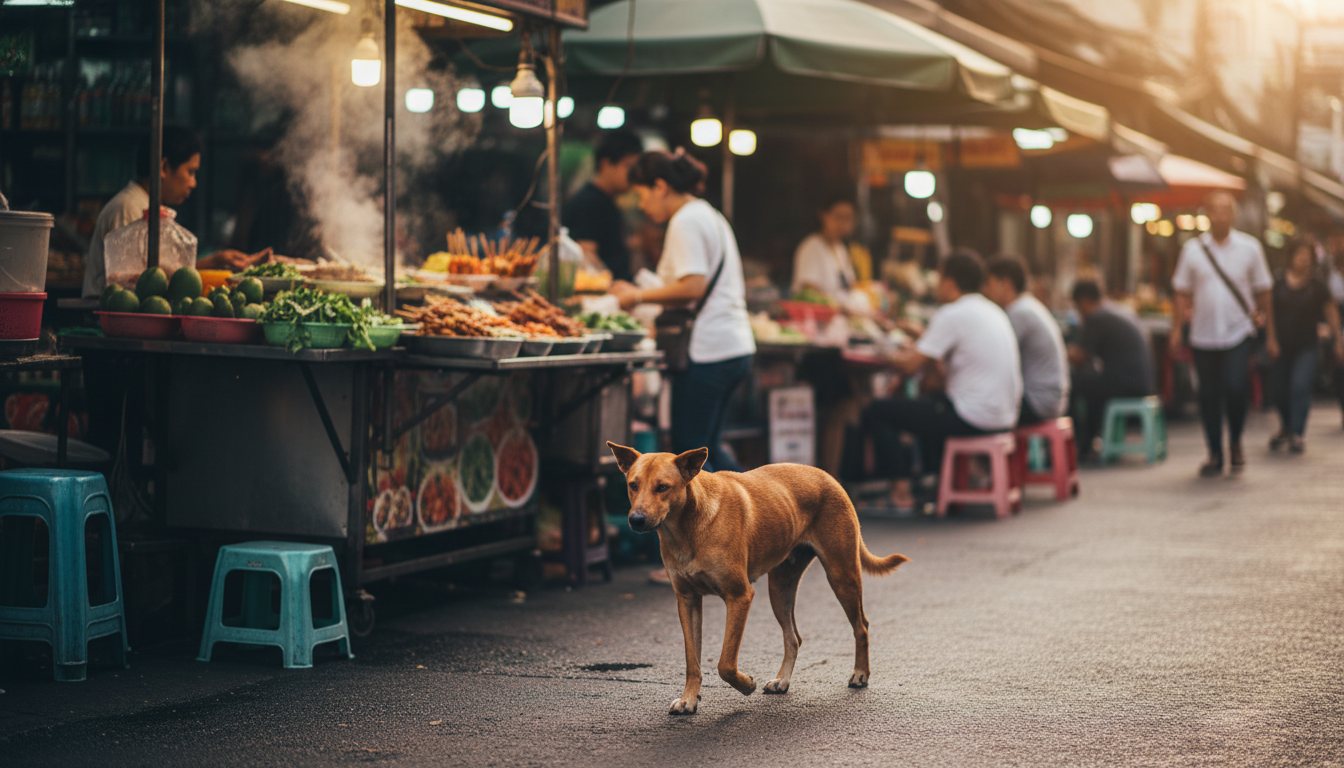
Thai streets have their own unique ecosystem, and you must learn how to navigate it together. Soi dogs are a permanent fixture of life here. Most are territorial but generally non-aggressive if respected.
- Do not make eye contact: Teach your dog to ignore the local street dogs. If you see a group of soi dogs ahead, shorten your leash, keep your dog on the opposite side of you (using your body as a shield), and walk past confidently without stopping or staring.
- The "leave it" command: This is crucial for avoiding street food scraps. From dropped sticky rice to fish bones, Thai sidewalks are a buffet of hazards. A rock-solid "leave it" cue will save you from emergency vet visits.
- Give vendors space: Street food carts are hot, crowded, and full of tempting smells. Give these stalls a wide berth to avoid your dog knocking over tables or getting too close to hot oil stoves.
Managing the Tropical Heat and Pavement
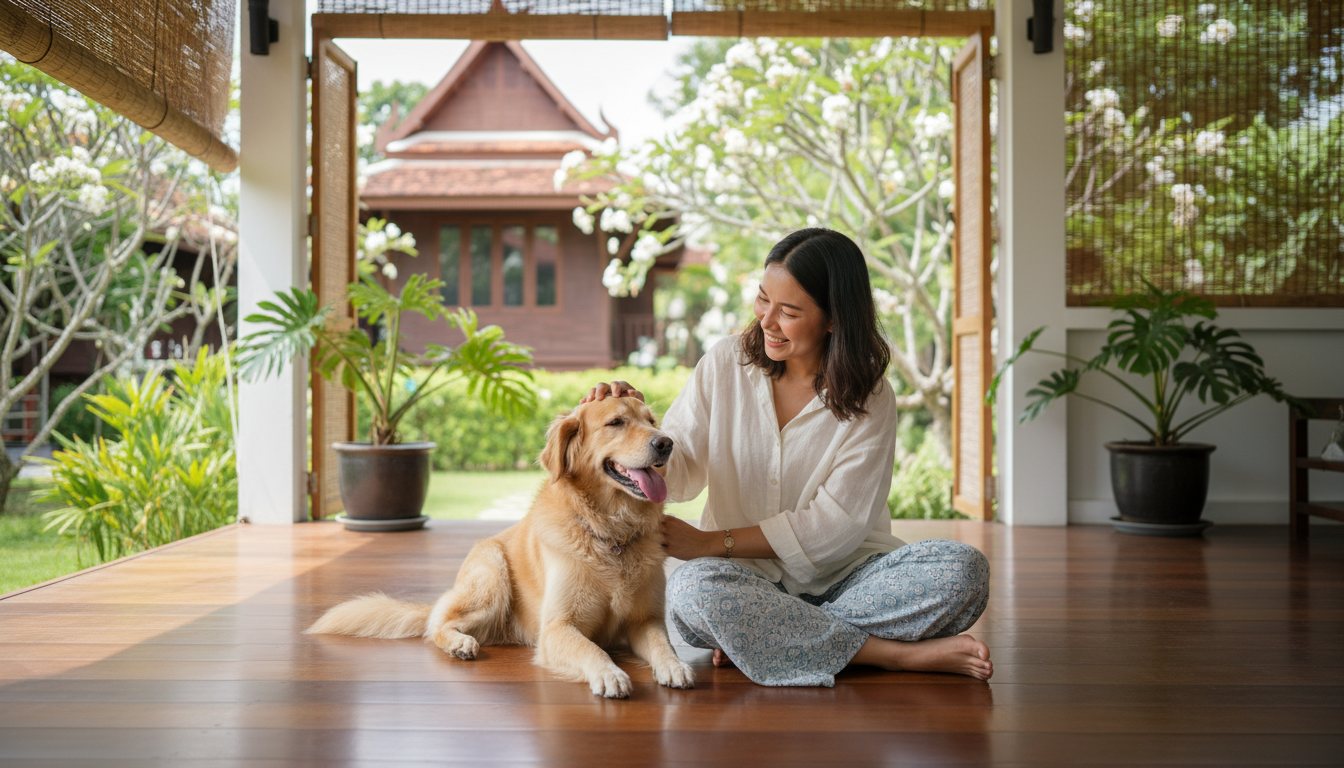
The tropical climate of Thailand adds an extra layer of difficulty to leash training. High humidity and scorching concrete can quickly turn a fun walk into a medical emergency. Heatstroke is a very real danger for dogs, particularly brachycephalic (flat-faced) breeds like pugs and French bulldogs.
Always perform the five-second test before stepping out. Place the back of your hand flat on the pavement. If you cannot comfortably hold it there for five seconds, it is far too hot for your dog's sensitive paw pads.
Stick to early mornings (before 7:30 AM) or late evenings (after 6:00 PM) when the sun is low. Always carry a portable water bottle and a collapsible bowl. If your dog begins panting heavily, seeking shade constantly, or slowing down significantly, stop immediately, offer water, and find a cool spot to rest. If you suspect heatstroke, seek veterinary care immediately.
Professional Training and Community Support
Leash training takes patience, consistency, and time. If you find yourself struggling with a dog that constantly pulls or reacts to every motorbike, do not hesitate to seek professional help. Working with a certified positive-reinforcement trainer can help you build a stronger bond with your pet and make walks enjoyable for both of you.
For pet owners in the south of Thailand, professional guidance is readily available. You can enroll in structured obedience courses at the Phuket Dog School & Hotel, where experienced trainers can help you master leash control in a controlled, safe environment.
Beyond formal training, connecting with fellow pet owners can offer invaluable support and socialization opportunities. Sharing experiences with others who navigate the same busy streets can give you new ideas and encouragement. Consider joining local community gatherings, such as the upcoming Meet the dog whisperer event, where you can chat with experts and swap tips with other dog lovers facing the same tropical training challenges.
Event
Sat 17 Oct · 09:30
Meet the Dog Whisperer
Hosted by James Anderson
The Purich's Garden
Remember, leash training is not a race. Every calm step your dog takes on a busy Thai sidewalk is a victory. Keep your training sessions short, positive, and highly rewarding, and soon you will both be navigating the vibrant streets of Thailand with confidence.
This guide is general information, not veterinary or legal advice. Rules, fees and requirements change: check with your vet or the relevant authority before you act.
Written by
Boba
Part of the Wagdee community of pet lovers in Thailand.
Keep reading
 Training & behaviour
26 April 2026 · 5 min read
Puppy Socialisation in Thailand: Cafés, Parks, and Meetups
Discover how to safely socialise your puppy in Thailand. Learn about safe exposure, dog-friendly cafés, park walks, and community meetups to raise a confident dog.
 Training & behaviour
22 April 2026 · 4 min read
Calming Pet Anxiety During Thai Storms and Fireworks
Help your dog or cat stay calm during Thailand's monsoon season, Loy Krathong, and New Year fireworks with our practical guide to managing pet noise anxiety.
 Training & behaviour
18 April 2026 · 5 min read
Teaching Your Dog to Swim Safely in Thailand
Keep your canine companion safe in the water. From tropical beaches to Bangkok dog pools, here is how to teach your dog to swim safely in Thailand.