

 ไทย
ไทย Français
 Русский
 Deutsch
 Español
 中文
中文 한국어
한국어 日本語
日本語Smart Feeders and Water Fountains in Thailand: Are They Worth It?
Discover how to make automatic pet feeders and water fountains work in Thailand's hot, humid climate, from battling ants to managing power outages.
Boba
10 August 2026 · 4 min read
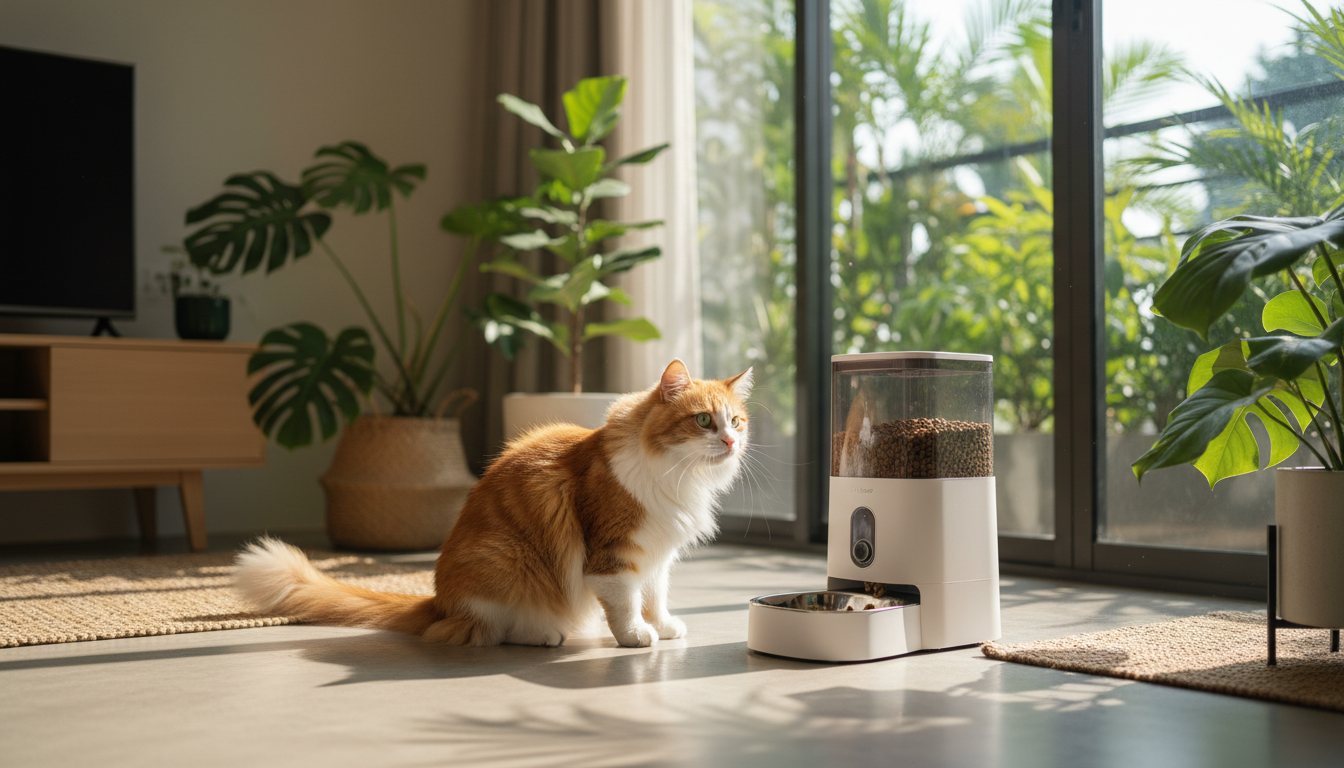
Living in Thailand with a dog or cat comes with its own unique set of joys and challenges. While we love the year-round warmth and the vibrant pet-friendly communities blooming from Chiang Mai to Bangkok, our tropical climate presents some serious hurdles for pet care. High humidity, sudden downpours, and soaring temperatures can quickly turn a bowl of fresh kibble stale or make standing water unappealing. This has led many local pet parents and expats to eye smart feeders and automated water fountains. But do these high-tech gadgets actually hold up against the realities of Thai weather, or do they just introduce a new set of headaches? Let's look at how these devices perform in our tropical environment.
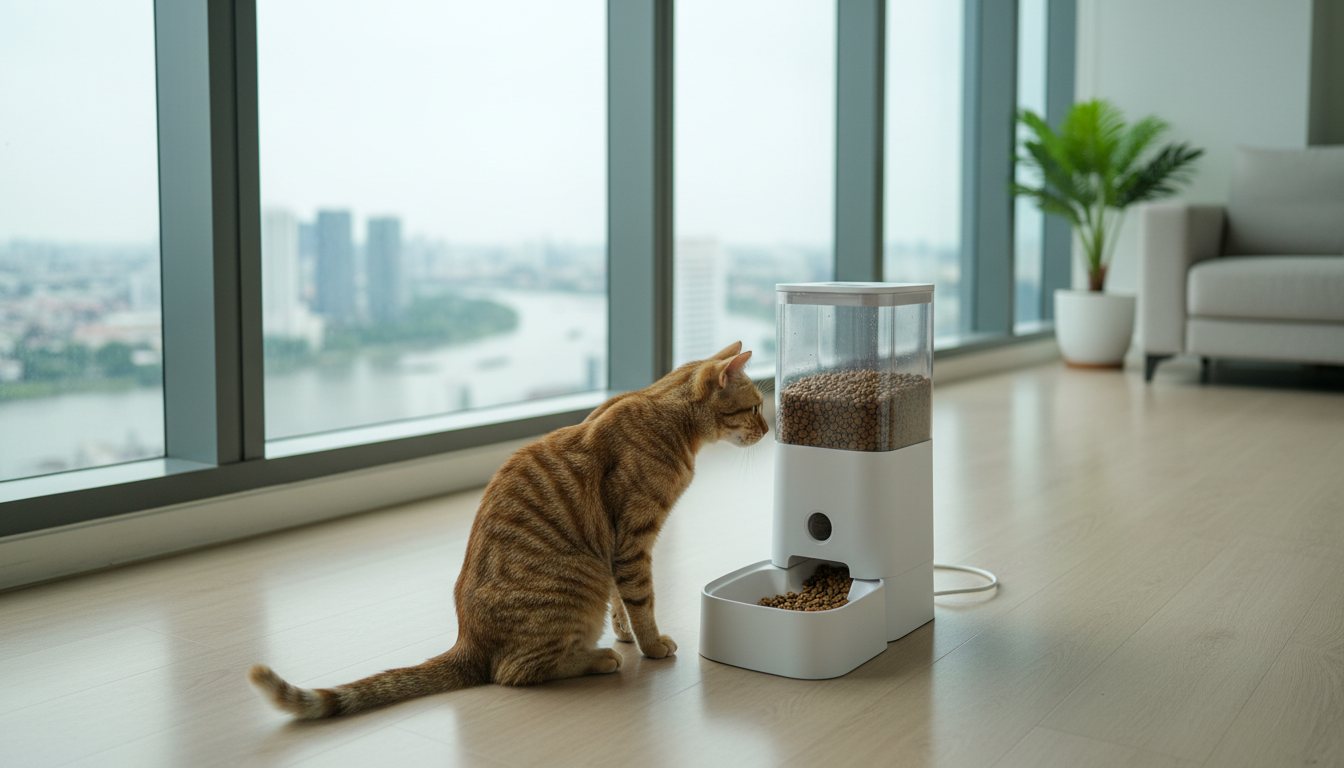
The Humidity Battle: Keeping Kibble Crisp
The biggest enemy of dry pet food in Thailand is our relentless humidity, which regularly hovers above 70 percent, especially during the monsoon season. When dry kibble is exposed to damp air, it quickly loses its crunch, becomes unpalatable to picky cats and dogs, and can even develop harmful mold.
Standard automatic feeders come with storage hoppers, but not all of them are built to withstand tropical air. If you are considering an automatic feeder, look for models that feature silicone sealing rings around the lid and a dedicated compartment for desiccant (silica gel) packs. Without these, the food inside the hopper will spoil long before your pet can finish it. We recommend changing the desiccant pack at least once a month during the rainy season to ensure the food remains fresh and safe.
The Ant Invasion: A Unique Thai Challenge
Anyone who has lived in Thailand for more than a week knows that ants are a force of nature. The moment a piece of kibble hits a bowl, a scout ant finds it, and within minutes, an entire army follows.
Many automatic feeders do not come with built-in ant protection. If you set up an automated schedule that drops food while you are at work, you might return home to find a bowl overflowing with ants rather than a happy pet. To combat this, you will need to create a physical barrier. Placing the entire feeder inside a shallow tray filled with water (a DIY moat) or using specialized ant-proof pet mats treated with non-toxic repellent is essential. Just make sure the water moat does not damage the feeder's electrical components or power cord.
Hydration in the Heat: Why Fountains Matter
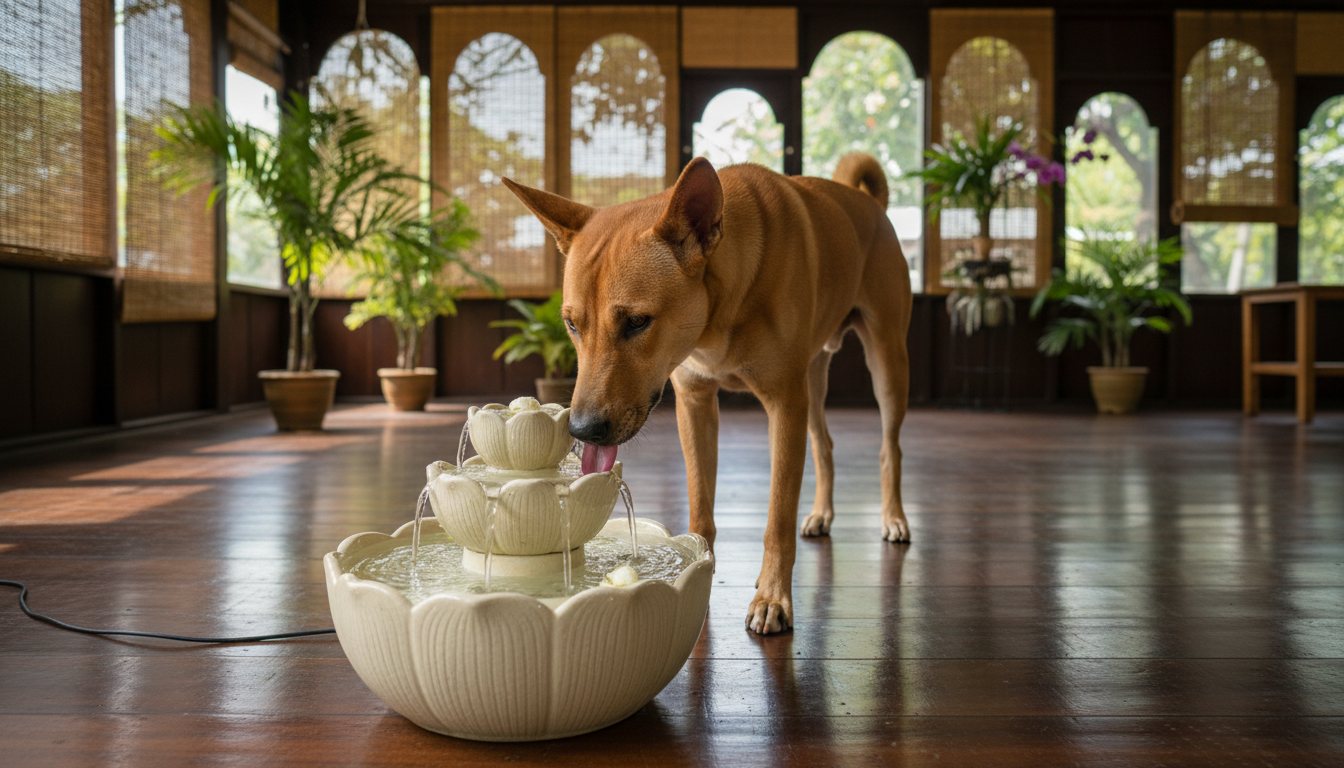
Keeping pets hydrated is crucial in Thailand, where heatstroke and urinary tract issues are common concerns. Dogs and cats are naturally drawn to running water, which is why circulating pet fountains are incredibly popular. The constant movement aerates the water, keeping it cooler and tasting fresher than a stagnant bowl sitting in a warm kitchen.
When shopping for these devices, it is highly beneficial to see them in person to evaluate their build quality, noise levels, and ease of disassembly. For those living in the capital, visiting a dedicated pet store like Pet's Concept in the Dindaeng-Phayathai-Ratchathewi area allows you to browse a wide selection of pet gear and speak with knowledgeable staff about which models suit your specific setup.

While a pet fountain is an excellent investment for your pet's kidney health, always consult your veterinarian if you notice sudden changes in your pet’s drinking habits, as this can be an early indicator of underlying health issues.
The Slime Factor: Cleaning Fountains in the Tropics
While water fountains are fantastic for encouraging hydration, the warm Thai climate accelerates the growth of bacteria, pink yeast, and algae. A fountain left unattended for a week in Bangkok's heat will quickly develop a slippery, slimy biofilm on its inner walls and pump.
In cooler climates, pet owners might get away with cleaning a fountain once every two weeks. In Thailand, you must commit to a weekly deep clean. This means completely dismantling the fountain, scrubbing the pump impeller, and washing all plastic or ceramic parts with warm, soapy water. If you have a busy lifestyle and cannot commit to this weekly chore, a traditional ceramic bowl washed daily might actually be the safer, more hygienic choice for your pet.
Power Cuts and Wi-Fi Glitches
Tropical storms in Thailand often bring sudden power fluctuations and brief blackouts. If your automatic feeder relies entirely on a wall outlet and your home Wi-Fi network to function, an afternoon storm could leave your pet without dinner.
When choosing a feeder, a dual power supply is a non-negotiable feature. Ensure the device accepts backup batteries (usually D-cell or rechargeable lithium batteries) so it can continue to dispense food on its internal schedule even if the electricity and Wi-Fi go down. Additionally, look for companion apps that store the feeding schedule locally on the device itself rather than relying entirely on cloud servers to trigger a feeding.
The Verdict: Are They Worth It?
Smart pet appliances can absolutely be worth the investment in Thailand, but they are not "set-and-forget" solutions. They require active management to suit our unique environment:
- Feeders are highly useful for managing portion sizes and feeding times, provided you use fresh desiccant packs and implement an ant-proofing strategy.
- Fountains are superb for keeping pets hydrated in the heat, but only if you are willing to clean them thoroughly once a week to prevent bacterial buildup.
By understanding these tropical quirks, you can use pet technology to truly enhance your dog or cat's quality of life while keeping your home running smoothly.
This guide is general information, not veterinary or legal advice. Rules, fees and requirements change: check with your vet or the relevant authority before you act.
Written by
Boba
Part of the Wagdee community of pet lovers in Thailand.
Keep reading
 Pet tech
6 August 2026 · 5 min read
GPS Trackers for Dogs: Peace of Mind in Thailand's Busy Cities
Keep your dog safe on busy Thai streets. Learn how GPS trackers, geofencing, and proper ID tags work together to protect your pet in any season.
 Pet tech
2 August 2026 · 4 min read
Pet Cameras: Checking in on Your Pet From the Office
Discover how to choose, secure, and position the perfect pet camera for your Bangkok condo to keep an eye on your dog or cat during the workday.
 Pet tech
29 July 2026 · 6 min read
Cooling Tech for Pets: Mats, Vests, and Fans That Actually Help
Discover which pet cooling gadgets actually work in Thailand's intense humidity, from pressure-activated mats to air-con strategies, and what to avoid to keep your pet safe.