

 ไทย
ไทย Français
 Русский
 Deutsch
 Español
 中文
中文 한국어
한국어 日本語
日本語GPS Trackers for Dogs: Peace of Mind in Thailand's Busy Cities
Keep your dog safe on busy Thai streets. Learn how GPS trackers, geofencing, and proper ID tags work together to protect your pet in any season.
Boba
6 August 2026 · 5 min read
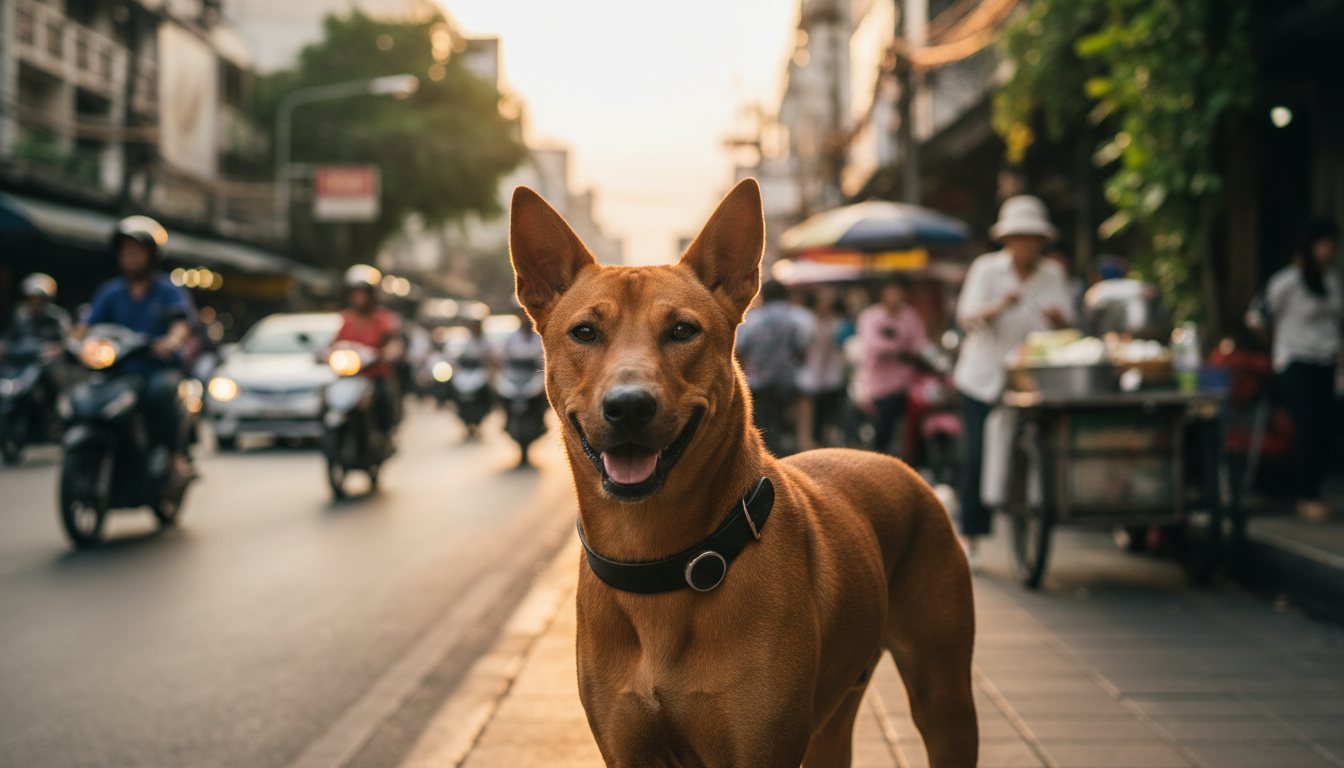
Navigating the vibrant, bustling streets of Thailand's cities with a dog is a wonderful adventure, but it comes with unique challenges. From the narrow, winding sois of Bangkok to the busy weekend markets of Chiang Mai, our urban environments are packed with sensory overload for a dog. A sudden burst of firecrackers during a festival, the tempting aroma of street-side grilled pork (moo ping), or a sudden encounter with a pack of local soi community dogs can cause even the most well-trained pup to bolt. In these high-distraction environments, keeping our four-legged family members safe is a top priority. While traditional collars and leashes are essential, modern technology in the form of GPS pet trackers is becoming a game-changer for Thai pet owners seeking true peace of mind.
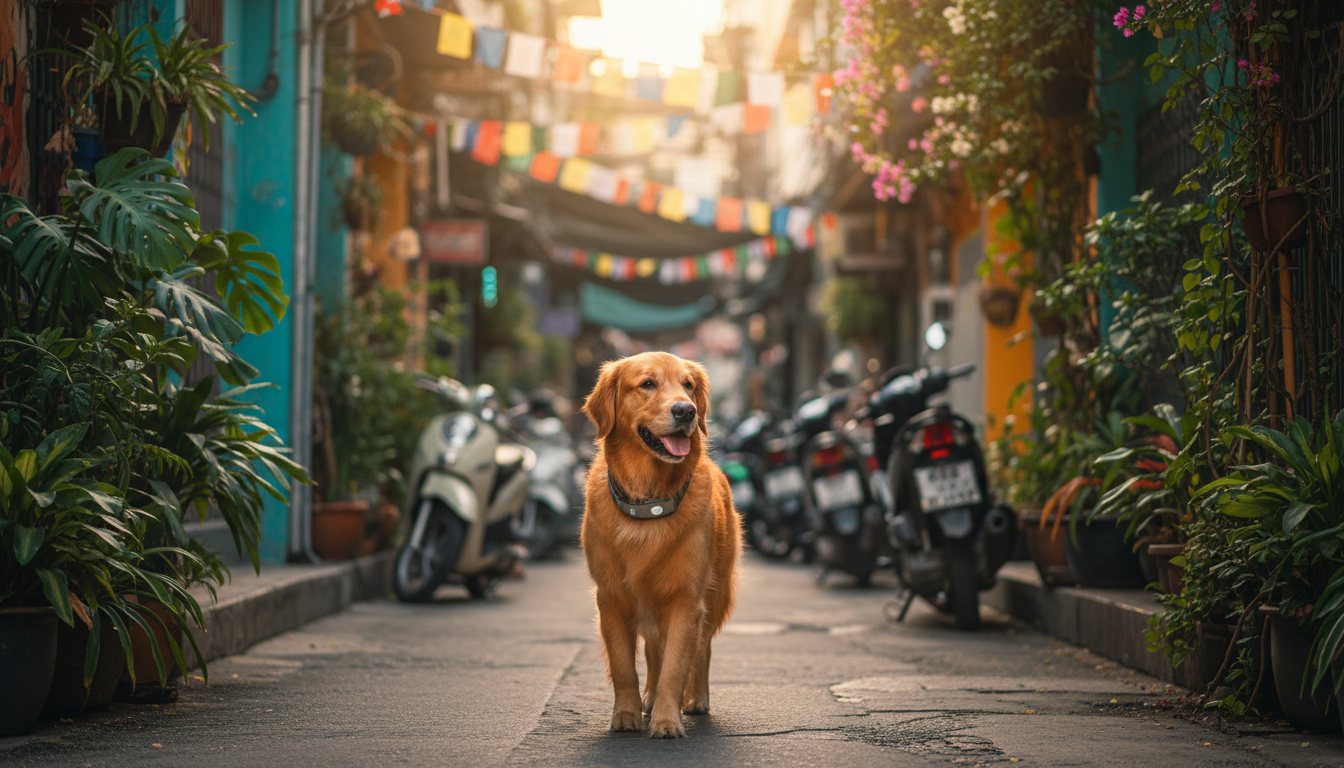
How GPS Pet Trackers Keep Your Dog Safe
To choose the right device for your dog, it helps to understand the technology inside these compact collar attachments. Most modern pet trackers use a combination of three distinct technologies to pinpoint your dog's location: GPS, mobile cellular networks, and Bluetooth.
The GPS (Global Positioning System) receiver inside the tracker communicates with satellites to calculate your dog's precise coordinates. This works incredibly well in open spaces, but in dense urban areas with high-rise condominiums or heavy tree canopy, the satellite signal can sometimes struggle.
To solve this, trackers also use mobile network integration. By utilizing a built-in SIM card, the device transmits its GPS coordinates over local cellular networks directly to an app on your smartphone. This means as long as there is mobile coverage—which is excellent across most Thai cities and towns—you can see your dog's location in real-time, even if they are kilometers away.
Lastly, Bluetooth is often used for close-range tracking. If your dog is hiding under a car in your soi or tucked away in a neighbor's garden, Bluetooth can help you pinpoint their exact spot within a range of about 10 to 50 meters, saving precious minutes during a search.
Weatherproofing and Battery Life in the Thai Climate
Thailand's climate demands a lot from electronic devices. Between the intense heat of the hot season and the torrential downpours of the monsoon, a pet tracker must be incredibly resilient.
When shopping for a tracker, waterproofing is non-negotiable. Look for devices with high IP (Ingress Protection) ratings, such as IP67 or IP68. An IP68-rated tracker can survive being fully submerged in water, which is essential if your dog decides to jump into a canal (khlong), play in deep puddles during a sudden afternoon storm, or cool off in the sea during a weekend trip to Hua Hin.
Battery life is another critical factor. Because GPS and cellular data transmission consume significant power, battery life can range from a couple of days to several weeks depending on the device and how often it updates the location. In Thailand's high humidity, batteries can sometimes drain slightly faster. We recommend choosing a device that allows you to adjust the update frequency—using longer intervals for everyday home life and switching to live-tracking mode only if your dog actually goes missing. Establishing a routine of charging the tracker alongside your mobile phone ensures it is always ready when you head out.
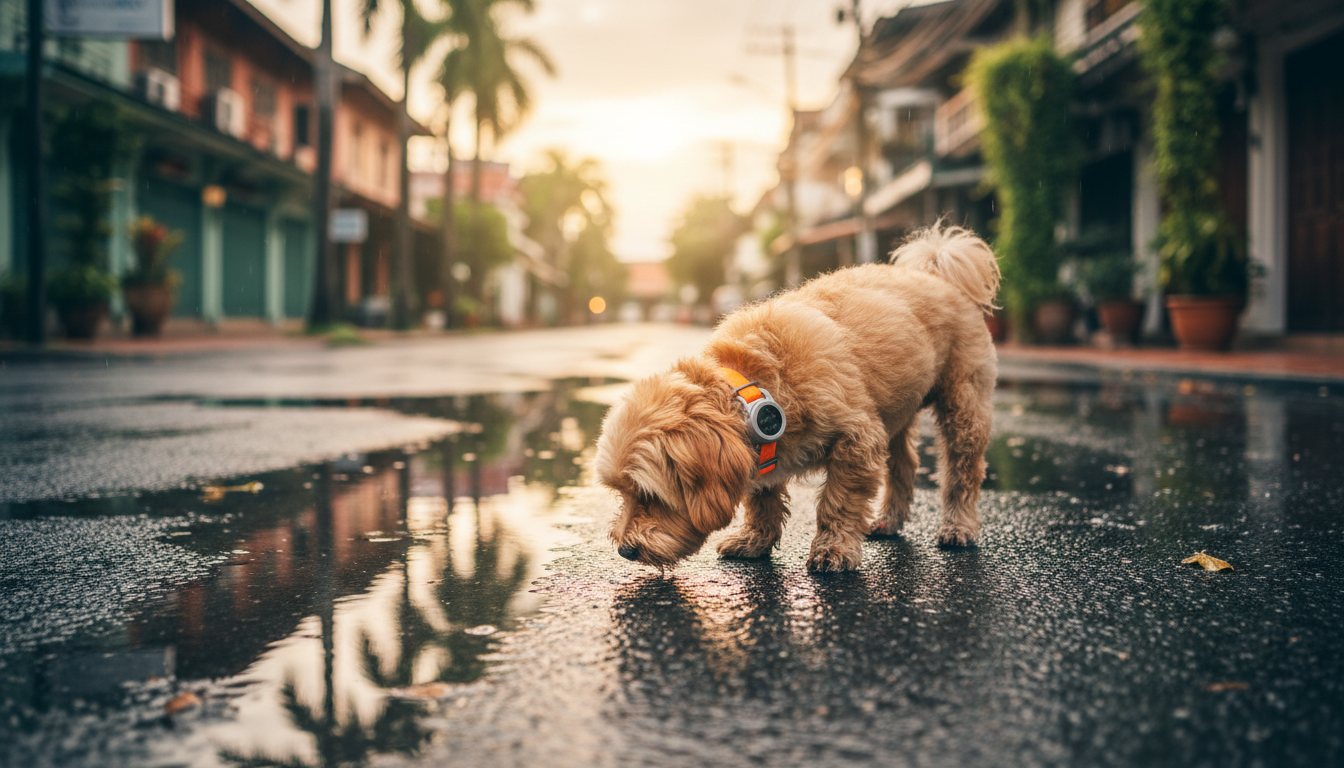
Geofencing: Virtual Fences for Peace of Mind
One of the most powerful features of modern GPS trackers is geofencing. A geofence is a virtual boundary that you draw on a digital map within your tracker's companion app. You can set this boundary around your home, your apartment building, or even your favorite pet-friendly cafe.
If your dog escapes through a gate left slightly open by a delivery driver or slips out of the garden, the tracker detects that the device has crossed the virtual boundary. The app immediately sends a push notification to your phone. This early warning system is incredibly valuable in busy Thai neighborhoods, allowing you to react and locate your dog before they wander onto a main road or get lost in unfamiliar territory.
Understanding the Costs: Device and Subscription
When investing in a GPS tracker, it is important to understand that there are usually two separate costs involved: the upfront cost of the hardware and an ongoing subscription fee.
Because these trackers rely on mobile networks to send location data to your phone, they require an active data plan, much like a second mobile phone. Manufacturers generally offer subscription plans on a monthly, annual, or multi-year basis. These fees cover the cost of the cellular data used by the tracker's internal SIM card.
While some basic Bluetooth-only tags do not require a subscription, they have a very limited range and rely on other nearby smartphone users to update the location. For true security in a busy city, a dedicated GPS tracker with a cellular subscription is highly recommended. Because subscription rates and network coverage can vary, we suggest checking the manufacturer's official website or consulting local pet tech retailers to find a plan that fits your budget and offers reliable coverage in your specific province.
The Ultimate Safety Trio: Trackers, Microchips, and ID Tags
While a GPS tracker is an incredible tool, it should not be used in isolation. The gold standard of pet safety relies on a three-layered approach:
- The GPS Tracker: Your active search tool. It provides real-time location tracking and immediate alerts if your dog escapes, allowing you to find them quickly.
- The Microchip: Your permanent proof of ownership. Unlike a collar, a microchip cannot fall off or be removed. It is a tiny transponder inserted under your dog's skin by a veterinarian. If your dog is found and taken to a clinic or shelter, they will scan the chip to retrieve your contact information.
- The Physical ID Tag: Your first line of contact. A simple, durable tag on your dog's collar with their name and your current Thai phone number is still the fastest way for a neighbor or local street vendor to contact you if they spot your dog wandering.
For microchipping, always consult your local veterinarian or check the latest guidelines from the Department of Livestock Development (DLD) regarding official pet registration databases in Thailand. By combining the immediate tracking power of GPS with the permanent security of a microchip and the simplicity of an ID tag, you can explore the beautiful, chaotic, and wonderful cities of Thailand with your dog with complete peace of mind.
This guide is general information, not veterinary or legal advice. Rules, fees and requirements change: check with your vet or the relevant authority before you act.
Written by
Boba
Part of the Wagdee community of pet lovers in Thailand.
Keep reading
 Pet tech
10 August 2026 · 4 min read
Smart Feeders and Water Fountains in Thailand: Are They Worth It?
Discover how to make automatic pet feeders and water fountains work in Thailand's hot, humid climate, from battling ants to managing power outages.
 Pet tech
2 August 2026 · 4 min read
Pet Cameras: Checking in on Your Pet From the Office
Discover how to choose, secure, and position the perfect pet camera for your Bangkok condo to keep an eye on your dog or cat during the workday.
 Pet tech
29 July 2026 · 6 min read
Cooling Tech for Pets: Mats, Vests, and Fans That Actually Help
Discover which pet cooling gadgets actually work in Thailand's intense humidity, from pressure-activated mats to air-con strategies, and what to avoid to keep your pet safe.