

 ไทย
ไทย Français
 Русский
 Deutsch
 Español
 中文
中文 한국어
한국어 日本語
日本語Cooling Tech for Pets: Mats, Vests, and Fans That Actually Help
Discover which pet cooling gadgets actually work in Thailand's intense humidity, from pressure-activated mats to air-con strategies, and what to avoid to keep your pet safe.
Boba
29 July 2026 · 6 min read
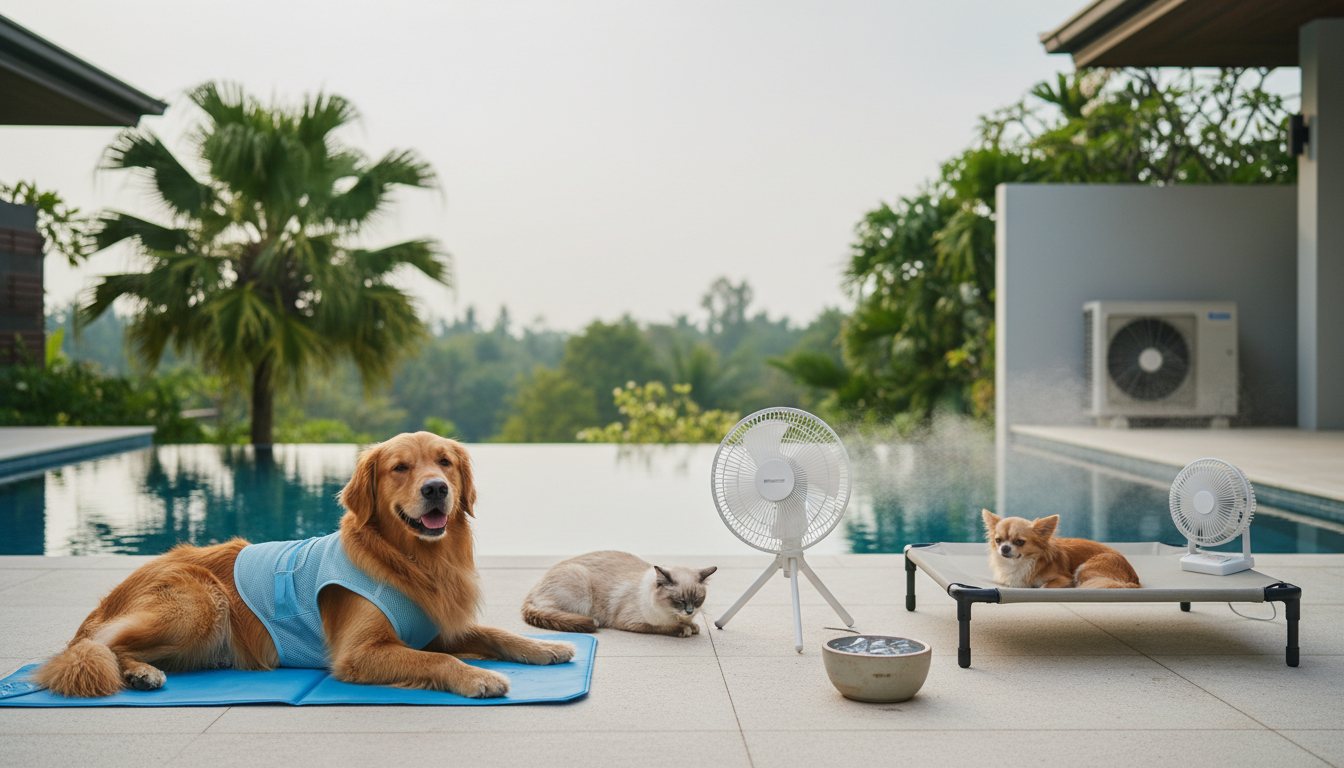
Living in Thailand means adapting to a tropical climate where "hot" is the default setting and "extremely hot" is the springtime standard. For pet owners in Bangkok, Chiang Mai, or the coastal islands, keeping our dogs and cats safe from the sweltering heat is a constant, year-round responsibility. While we can easily grab an iced drink and adjust the air conditioning, our furry companions rely entirely on us to manage their environment. With an array of pet-cooling gadgets flooding the Thai market, it is easy to spend a fortune on high-tech promises. Understanding how these tools interact with Thailand's unique climate is essential to investing in gear that actually works.
Safe Condo Temperatures and the Humidity Factor
Many pet owners in Thailand live in high-rise condominiums where concrete walls absorb heat throughout the day and radiate it inward long after the sun goes down. If you leave your pet home alone while you go to work, leaving the apartment sealed up without any climate control can quickly turn it into an oven.
As a general rule, a safe indoor temperature for most healthy dogs and cats is between 26°C and 28°C, provided there is active air circulation. However, flat-faced (brachycephalic) breeds like Pugs, French Bulldogs, and Persian cats have a much harder time regulating their body temperature and require a cooler environment, ideally around 24°C to 25°C.
While running the air conditioner all day is the most reliable way to keep the air cool, it can lead to high electricity bills. If you choose to leave the air conditioning off during milder months, you must ensure your pet has access to the coolest, shaded parts of the home, plenty of fresh water, and active ventilation. Keep in mind that Thailand's high relative humidity makes it harder for pets to cool themselves naturally through panting.
Cooling Mats: Pressure-Activated Gel vs. Water-Filled
Cooling mats are among the most popular and accessible pet accessories in Thailand. They generally fall into two categories: pressure-activated gel mats and water-filled mats.
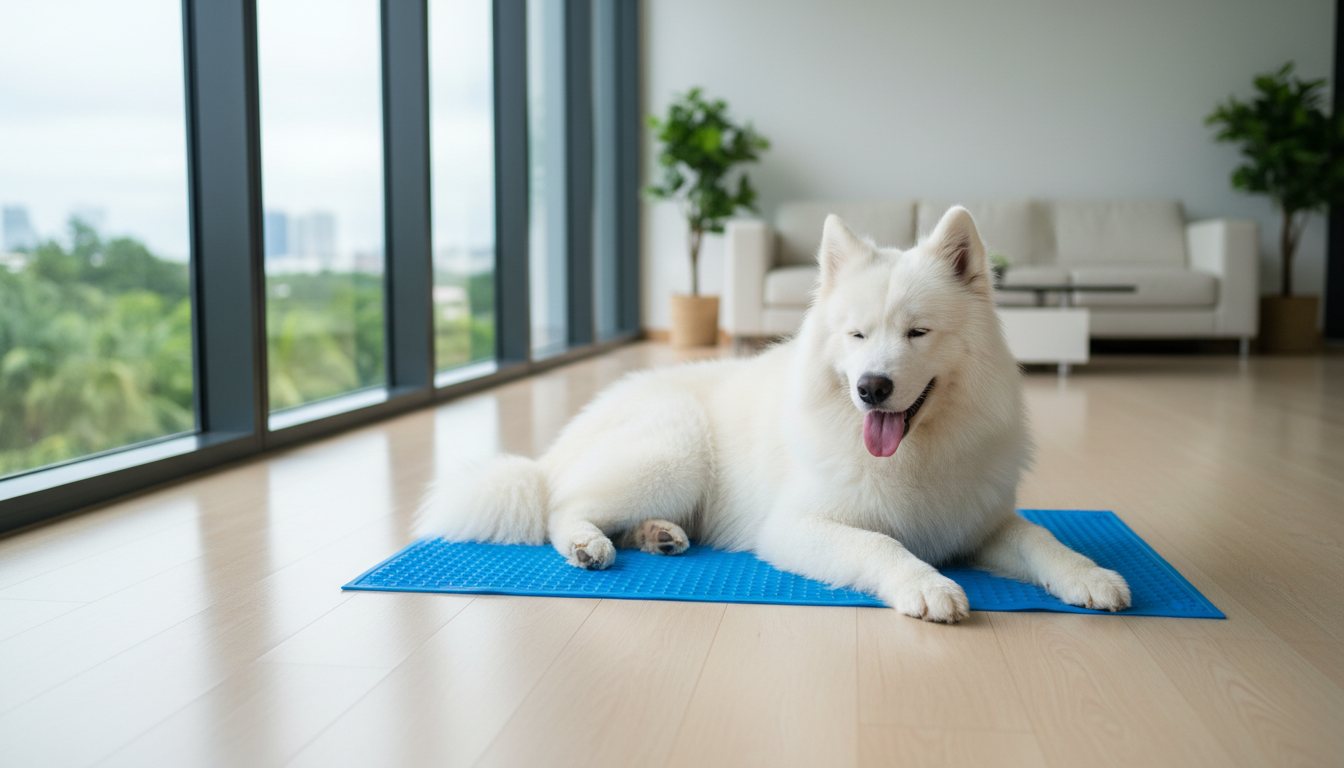
Pressure-activated gel mats contain a specialized non-toxic gel that absorbs your pet's body heat and dissipates it back into the air. They do not require electricity or refrigeration to work; they simply reset when the pet stands up and leaves the mat for a few minutes. These are highly effective for both dogs and cats. Because they are cool to the touch (typically a few degrees below room temperature), many pets naturally seek them out on hot afternoons.
Water-filled mats are another option, but they are less practical for the Thai climate. They are heavy, prone to leaking, and can quickly warm up to match the ambient room temperature, rendering them ineffective. Additionally, the constant moisture and warmth in and around a water mat can create a breeding ground for mold and mildew in humid tropical environments.
If you choose a gel mat, monitor your pet closely at first. While the gel is typically non-toxic, swallowing the outer plastic or the inner gel can cause intestinal blockages. If your dog or cat is a heavy chewer, a cooling mat might not be the safest choice for unsupervised use.
Evaporative Vests and the Thai Humidity Problem
Evaporative cooling vests are designed to be soaked in water, wrung out, and worn by your dog. As the water evaporates from the fabric, it mimics the natural cooling effect of sweat, drawing heat away from the dog's body.
While these vests work exceptionally well in dry, arid climates, they are far less effective in Thailand's high humidity. When the air is already saturated with moisture—as it often is during the monsoon season or in coastal areas—water cannot evaporate efficiently from the vest. Instead of cooling your dog down, a wet vest can trap warm air and moisture against their skin, potentially raising their body temperature and creating a moist environment ripe for hot spots and fungal skin infections.
If you do use an evaporative vest, reserve it for dry, windy days, or use it indoors directly in front of a fan where the active airflow can assist with evaporation. Never leave a wet vest on a dog indoors without excellent ventilation, and never leave a wearing pet unsupervised.
Fans vs. Air Conditioning: The Truth About Pet Sweat
It is a common sight in Thailand to see a family dog or cat sleeping directly in front of a powerful electric fan. While fans are a staple of Thai households, it is important to understand their limitations when it comes to pets.
Humans cool down when wind passes over wet skin, evaporating our sweat. Dogs and cats do not sweat through their skin in the same way; they only have sweat glands in their paw pads, relying primarily on panting to exchange hot body air for cooler ambient air. Because of this, a fan blowing warm air across a dog's furry coat does very little to lower their core body temperature.
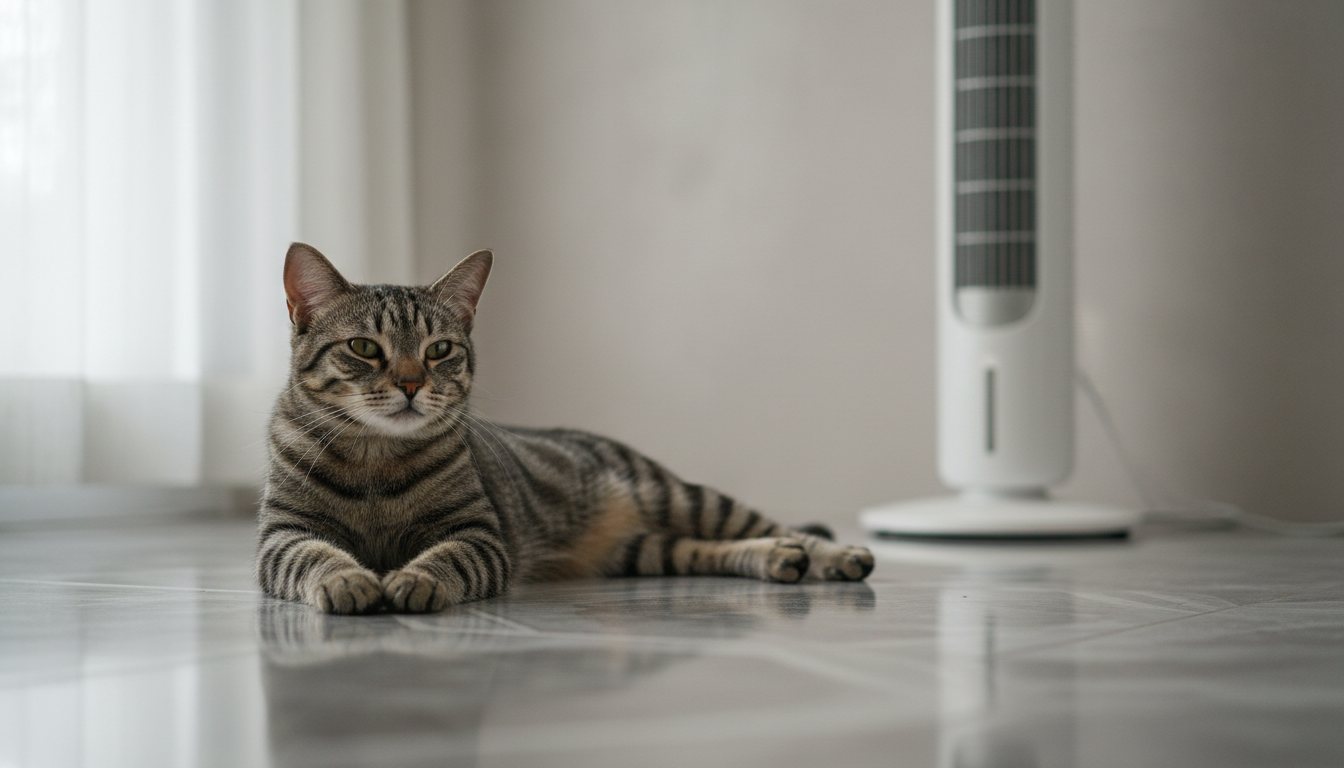
Fans are only effective for pets if the ambient room temperature is already lower than the pet's body temperature, or if you use them in combination with other cooling methods. For example, placing a fan so it blows directly over a pressure-activated cooling mat or a damp tile floor can help dissipate heat much faster. If the room itself is hot and stagnant, a fan alone will not prevent heatstroke.
What Doesn't Work (And Can Be Dangerous)
In our eagerness to keep our pets comfortable, it is easy to make mistakes that actually put them at risk. Here are a few common practices that should be avoided:
- Shaving double-coated breeds: Breeds like Huskies, Golden Retrievers, Pomeranians, and Persian cats have a double coat that acts as natural insulation. Shaving this coat ruins their ability to regulate their temperature, exposes their sensitive skin to sunburn, and actually makes them more susceptible to the heat.
- Using ice baths for overheating: If you suspect your pet is overheating, never submerge them in ice water or apply ice packs directly to their body. Cold water causes the blood vessels near the skin to constrict, which traps heat inside the body's core, making the condition worse.
- Leaving pets on balconies: High-rise balconies in Bangkok can reach extreme temperatures due to direct sunlight and the exhaust heat from air conditioning compressors. Never leave a pet locked on a balcony, even for a short period.
Recognizing Heatstroke and When to See a Vet
Despite our best efforts, heat emergencies can happen. Heatstroke is a life-threatening medical emergency that requires immediate veterinary intervention. Watch for signs such as heavy, frantic panting, bright red or pale gums, thick saliva, vomiting, lethargy, or loss of coordination.
If you notice these signs, move your pet to a cool, shaded area immediately. Drape cool (not cold) wet towels over their body, particularly around their neck, armpits, and groin, and run a fan over them. Offer them cool water to drink, but do not force them to drink. Once you have initiated these first-aid measures, transport them to your local veterinary clinic immediately.
For specific advice on managing your pet's health during the hot season, or to establish an emergency plan, always consult with a licensed veterinarian in your area.
This guide is general information, not veterinary or legal advice. Rules, fees and requirements change: check with your vet or the relevant authority before you act.
Written by
Boba
Part of the Wagdee community of pet lovers in Thailand.
Keep reading
 Pet tech
10 August 2026 · 4 min read
Smart Feeders and Water Fountains in Thailand: Are They Worth It?
Discover how to make automatic pet feeders and water fountains work in Thailand's hot, humid climate, from battling ants to managing power outages.
 Pet tech
6 August 2026 · 5 min read
GPS Trackers for Dogs: Peace of Mind in Thailand's Busy Cities
Keep your dog safe on busy Thai streets. Learn how GPS trackers, geofencing, and proper ID tags work together to protect your pet in any season.
 Pet tech
2 August 2026 · 4 min read
Pet Cameras: Checking in on Your Pet From the Office
Discover how to choose, secure, and position the perfect pet camera for your Bangkok condo to keep an eye on your dog or cat during the workday.