

 ไทย
ไทย Français
 Русский
 Deutsch
 Español
 中文
中文 한국어
한국어 日本語
日本語Automatic Litter Boxes: A Guide for Thailand Condo Cat Owners
Thinking of upgrading to a self-cleaning litter box for your Thai condo? Discover how to manage tropical humidity, keep your kitten safe, and choose the best setup.
Boba
24 July 2026 · 5 min read
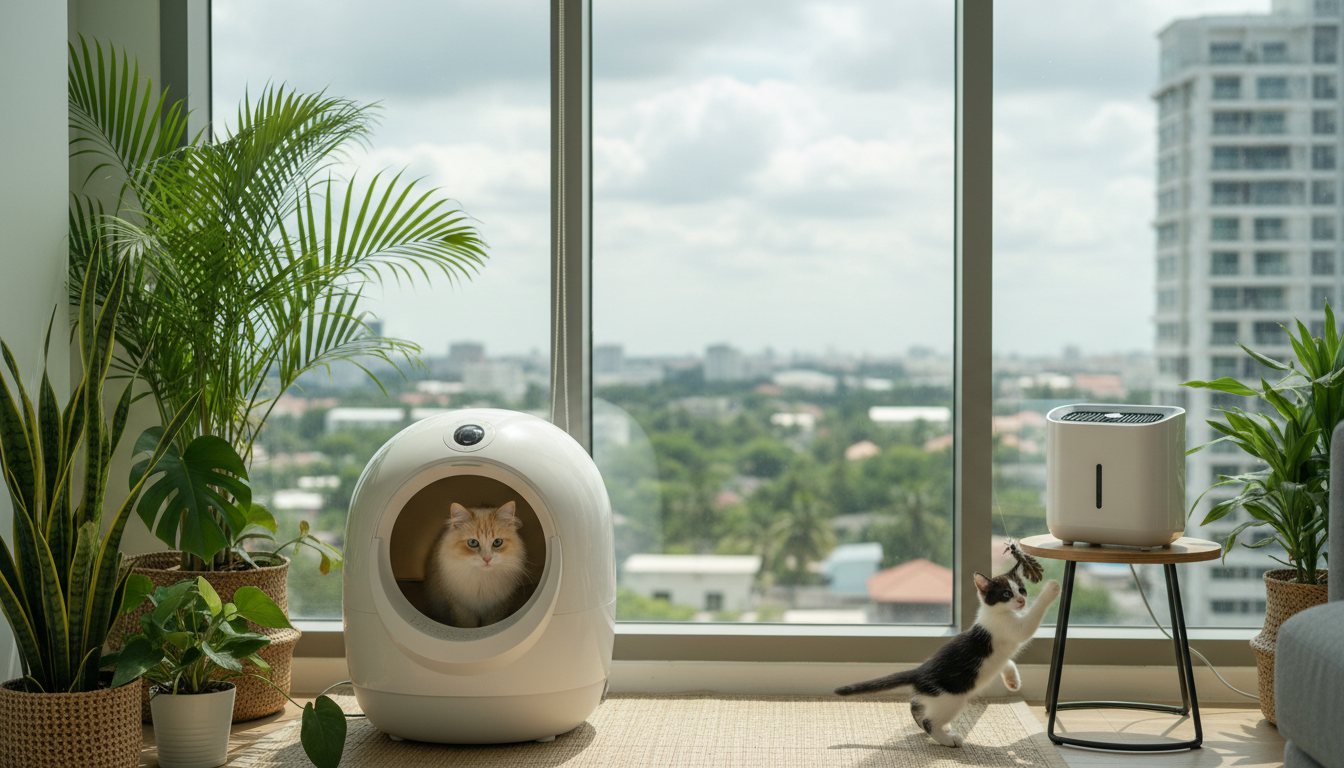
Living in a high-rise condo in Bangkok or Chiang Mai with a feline companion brings immense joy, but it also brings unique spatial challenges. In a cozy studio or one-bedroom unit, every square meter counts, and the placement of your cat's litter facilities becomes a major design and lifestyle decision. Enter the automatic, self-cleaning litter box. For many Thai pet owners, these high-tech devices promise a hands-off solution to daily scooping. But before you invest a significant portion of your monthly budget into one of these appliances, it is essential to understand how they perform in Thailand's specific environment, from tropical humidity to compact condo layouts.

How Automatic Litter Boxes Work in Small Spaces
Most automatic litter boxes operate on a simple but effective premise. They use motion and weight sensors to detect when your cat has entered and exited the machine. After a set delay—usually between three and fifteen minutes to allow the waste to clump—the machine initiates a cleaning cycle.
Depending on the design, the inner drum of the box will either rotate, passing the litter through a screen that separates the clean granules from the clumps, or a mechanical rake will sweep through the tray. The waste is then deposited into a lined drawer, typically located at the bottom or rear of the unit.
In a condo, this mechanism offers a massive aesthetic upgrade. Instead of looking at an open, unsightly plastic tray, you have a sleek, enclosed appliance that resembles a futuristic capsule. This enclosure also helps contain litter scatter, preventing those annoying sandy tracks on your polished tiles or wood-laminate flooring.
The Humidity Factor: Odour Control in a Tropical Climate
While manufacturers often promise weeks of odour-free living, Thailand's tropical climate adds a layer of complexity. High humidity levels, particularly during the southwest monsoon season from June to October, can severely impact how these machines perform.
Moisture in the air prevents clay-based bentonite litter from drying out quickly. In an enclosed automatic box, trapped humidity can turn the waste drawer into a damp chamber, accelerating bacterial growth and intensifying smells. To manage this effectively in a Thai condo, keep these practical tips in mind:
- Avoid the bathroom: Never place an electronic litter box in a bathroom. The steam from your daily showers will saturate the litter, ruin its clumping ability, and potentially damage the sensitive electronic sensors.
- Utilize air conditioning: Place the unit in a room that benefits from regular air conditioning or consistent airflow, such as the living room or a hallway near a covered balcony door.
- Empty the bin frequently: Do not wait for the waste drawer to fill up completely. In a humid climate, it is best to empty the waste bag every two to three days to prevent mold and ammonia build-up.
- Use desiccant packs: Many modern units have a dedicated compartment for odour-absorbing gel or carbon filters. Adding a small silica gel pack to the waste drawer can help absorb excess moisture.
Navigating Noise and Condo Layouts
In a spacious house, a whirring appliance in the utility room goes unnoticed. In a 35-square-meter condo, however, every sound is amplified. While high-quality automatic litter boxes are designed to operate quietly, they are not completely silent.
The low hum of a rotating motor or the scraping sound of a rake can be surprisingly disruptive in the dead of night, especially if your condo has thin walls or an open-plan layout where your bed is close to the living space.
To maintain a peaceful home and keep relations friendly with your downstairs neighbors, consider the machine's placement carefully. Placing the unit directly on hard tiled floors can cause vibrations to travel through the building structure. Placing a thick, heavy-duty silicone or foam mat under the machine will significantly dampen this noise. Additionally, many smart litter boxes allow you to schedule a "do not disturb" or "sleep" mode via their mobile apps, pausing all automatic cycles during your sleeping hours.
Cat Acceptance and Safety for Kittens
Transitioning your cat to an automatic box requires patience. To a sensitive feline, a giant, humming plastic dome that moves on its own can look like a threat. When introducing the machine, leave it powered off for the first few days. Let your cat sniff it, step inside, and get comfortable with its presence. Keep their old, familiar manual tray nearby, and only remove it once you are certain they are using the automatic box regularly.
A critical safety warning applies to young kittens. Most automatic litter boxes rely on weight sensors to detect when a cat is inside. If a kitten is too light—typically under 1.5 kilograms (roughly under six months of age)—the machine may not register their presence.
If the machine begins a cleaning cycle while an underweight kitten is exploring the interior, it can lead to severe entrapment injuries. For safety, always keep the machine unplugged and scoop the waste manually until your kitten has grown past the manufacturer's specified weight limit. If you are unsure about your kitten's growth, development, or overall safety, consult your local veterinarian for guidance.
The Reality of Maintenance and Deep Cleaning
It is easy to fall into the trap of thinking an automatic litter box means zero maintenance. In reality, these machines require regular, hands-on care to remain hygienic and functioning.
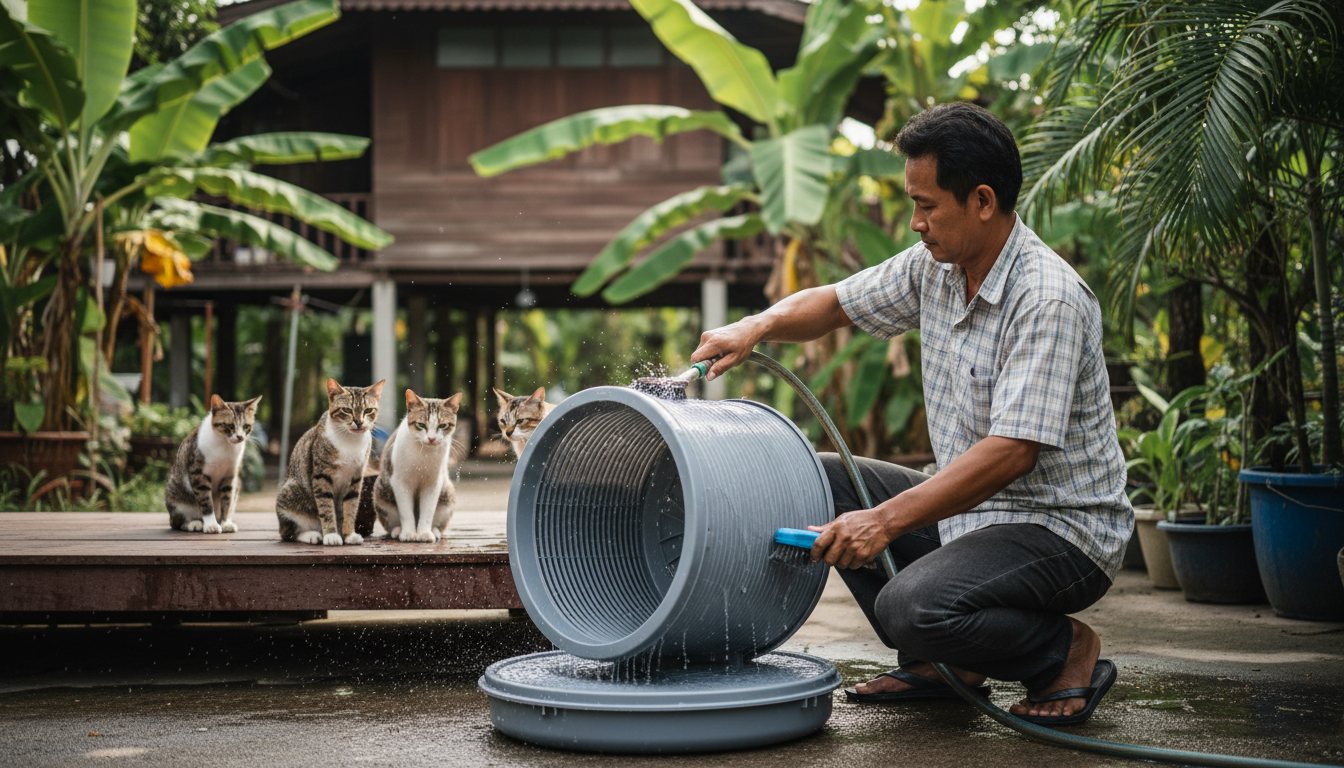
Over time, fine dust from the litter will coat the sensors, and small pieces of waste can stick to the inner lining of the drum. At least once a month, you must perform a deep clean. This process involves:
- Unplugging the unit and emptying all remaining litter.
- Dismantling the main drum or globe from the motorized base (never get the electronic base wet).
- Washing the plastic components thoroughly with warm water and a mild, pet-safe detergent.
- Allowing the parts to dry completely.
Fortunately, Thailand's sunny climate is perfect for this. Taking the washed plastic drum out onto your condo balcony to dry in the afternoon sun is an excellent way to naturally sanitize the components. Just ensure every nook and cranny is completely dry before reassembling the unit, as any residual moisture will cause new litter to clump instantly and could damage the interior seals.
By understanding the unique environmental demands of condo living in Thailand, you can make an informed decision that keeps both your home fresh and your feline companion safe and happy.
This guide is general information, not veterinary or legal advice. Rules, fees and requirements change: check with your vet or the relevant authority before you act.
Written by
Boba
Part of the Wagdee community of pet lovers in Thailand.
Keep reading
 Pet tech
10 August 2026 · 4 min read
Smart Feeders and Water Fountains in Thailand: Are They Worth It?
Discover how to make automatic pet feeders and water fountains work in Thailand's hot, humid climate, from battling ants to managing power outages.
 Pet tech
6 August 2026 · 5 min read
GPS Trackers for Dogs: Peace of Mind in Thailand's Busy Cities
Keep your dog safe on busy Thai streets. Learn how GPS trackers, geofencing, and proper ID tags work together to protect your pet in any season.
 Pet tech
2 August 2026 · 4 min read
Pet Cameras: Checking in on Your Pet From the Office
Discover how to choose, secure, and position the perfect pet camera for your Bangkok condo to keep an eye on your dog or cat during the workday.