

 ไทย
ไทย Français
 Русский
 Deutsch
 Español
 中文
中文 한국어
한국어 日本語
日本語Road-Tripping Thailand with Your Dog: The Ultimate Guide
Hit the open road with your canine companion. From beating the tropical heat to finding dog-friendly stops, here is how to road-trip Thailand safely.
Boba
18 June 2026 · 5 min read
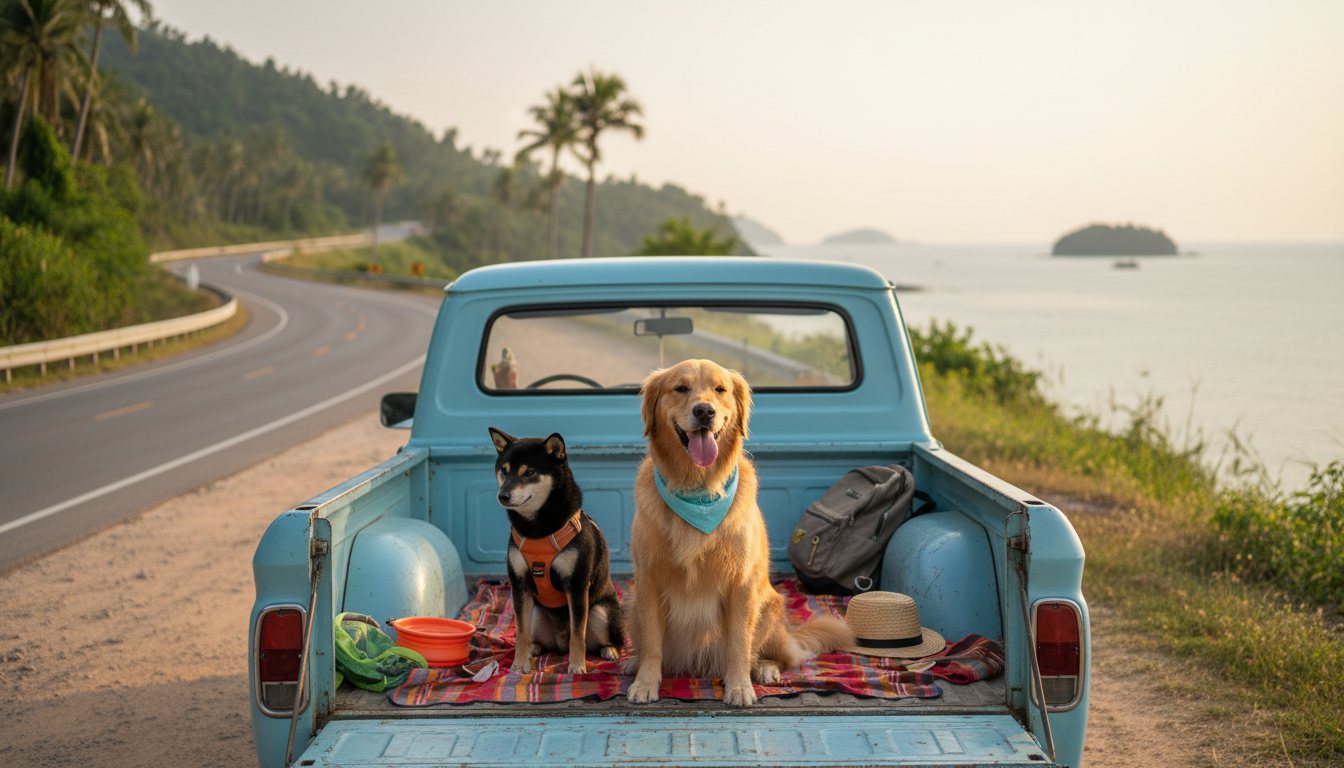
Exploring Thailand by car offers unparalleled freedom. Whether you are chasing the cooler breezes of Chiang Mai, cruising down to the beaches of Hua Hin, or exploring the lush national parks of Khao Yai, having your dog along for the ride makes the journey infinitely better. However, navigating Thailand's highways, tropical climate, and unique roadside culture with a canine passenger requires careful preparation. From unpredictable traffic to intense heat, a successful road trip relies on prioritizing your dog's safety, comfort, and health every kilometer of the way.
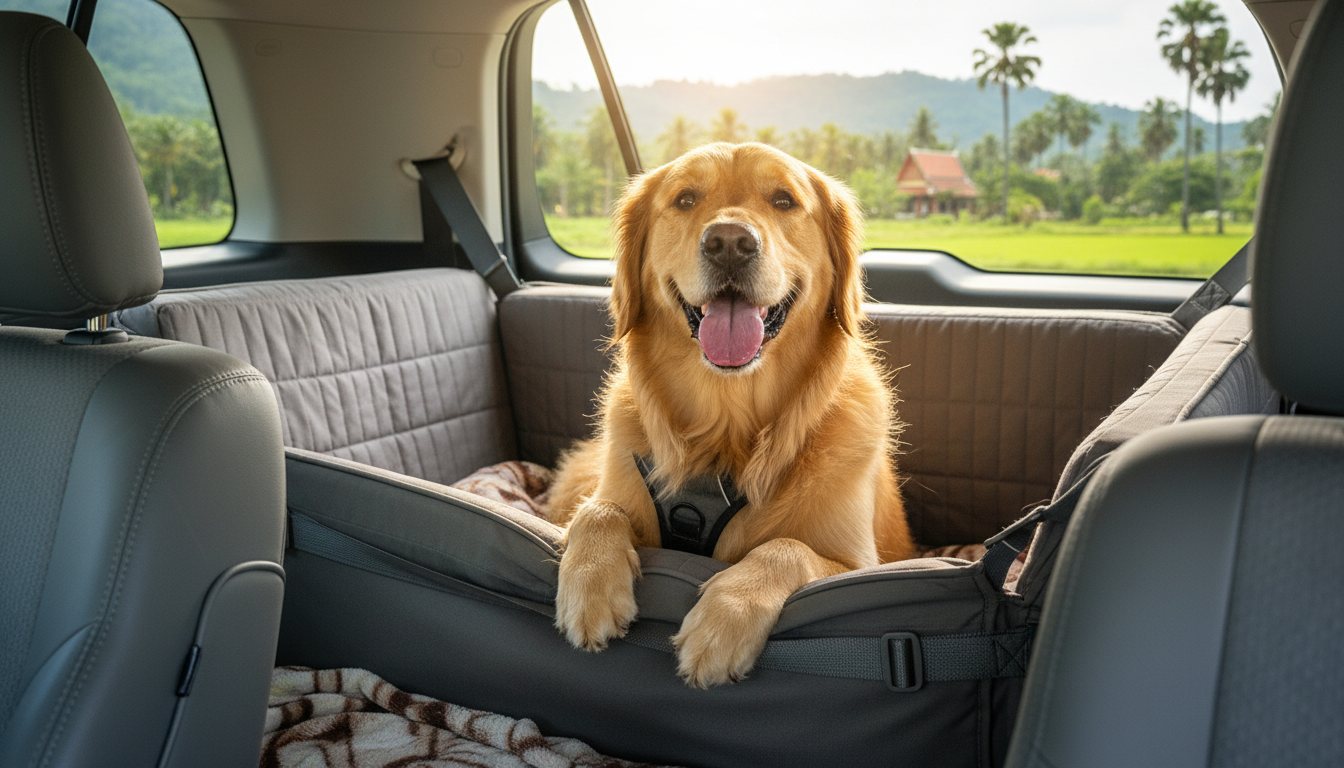
Securing Your Dog for the Drive
It can be tempting to let your dog ride shotgun with their head hanging out the window, but highway speeds in Thailand demand proper restraint. Sudden braking, sharp turns, or unexpected encounters with scooters require your dog to be securely anchored. An unrestrained pet can easily become a projectile in an accident or distract you while driving.
To keep your dog safe, invest in one of these three methods:
- A crash-tested harness: This clips directly into the seatbelt receiver, allowing your dog to sit or lie down comfortably while remaining secure.
- A travel crate: A sturdy crate secured in the back of an SUV or on the backseat is the safest option for many dogs, especially those prone to pacing.
- A cargo barrier: If you drive an estate or SUV, a sturdy metal barrier keeps your dog safely in the rear cargo area.
Never let your dog sit in your lap while driving, and ensure they cannot access the driver's footwell.
Beating the Intense Thai Heat
Thailand's tropical climate is one of the biggest challenges of road-tripping with a pet. Inside a parked car, temperatures can reach lethal levels in a matter of minutes, even with the windows cracked.
Never leave your dog unattended in a parked vehicle, not even for a quick run into a convenience store. If you must stop and cannot bring your dog with you, one adult must stay in the running car with the air conditioning on.
To keep your dog cool while driving:
- Use window shades on the rear side windows to block direct sunlight.
- Keep the air conditioning running at a comfortable level, ensuring vents are pointed toward your dog's area.
- Pack plenty of fresh, cold water in insulated flasks, along with a portable travel bowl.
- Watch for signs of heat exhaustion, which include excessive panting, dark red gums, lethargy, and vomiting. If you suspect heatstroke, move your dog to an air-conditioned space immediately, drape them in cool (not ice-cold) wet towels, and seek urgent veterinary care.
Mastering the Thai Rest Stop
Thailand's highway gas stations—particularly the large PTT stations—are legendary for their convenience, offering cafes, restaurants, and clean restrooms. They are also excellent places for your dog to stretch their legs and relieve themselves, provided you take a few precautions.
Always keep your dog on a short, secure leash when walking around rest stops. These areas are highly active, with cars, tour buses, and delivery trucks moving in every direction. Additionally, many gas stations are home to local community dogs (soi dogs). While many are friendly or indifferent, some can be territorial. Keep a respectful distance, avoid confrontation, and steer your dog away if you spot local dogs nearby.
Be a responsible pet owner by carrying waste bags and cleaning up after your dog immediately. Dispose of the bags in designated outdoor trash bins to ensure pet owners remain welcome at these stops.
Managing Motion Sickness and Anxiety
Just like humans, dogs can suffer from motion sickness and travel anxiety. If your dog is not used to long car rides, the winding roads of Northern Thailand, such as the famous route to Pai, can easily trigger nausea.
To help your dog adjust, start with short, positive trips to a local park or cafe before tackling a multi-hour journey. On the day of your road trip, feed your dog a light meal two to three hours before departure rather than right before hitting the road. This gives their stomach time to settle.
If your dog shows signs of severe anxiety, excessive drooling, or vomiting, consult your veterinarian before the trip. They can recommend safe motion sickness remedies or mild sedatives tailored to your dog's size and health profile. Never administer human medications or unprescribed veterinary drugs.
Booking Pet-Friendly Accommodations
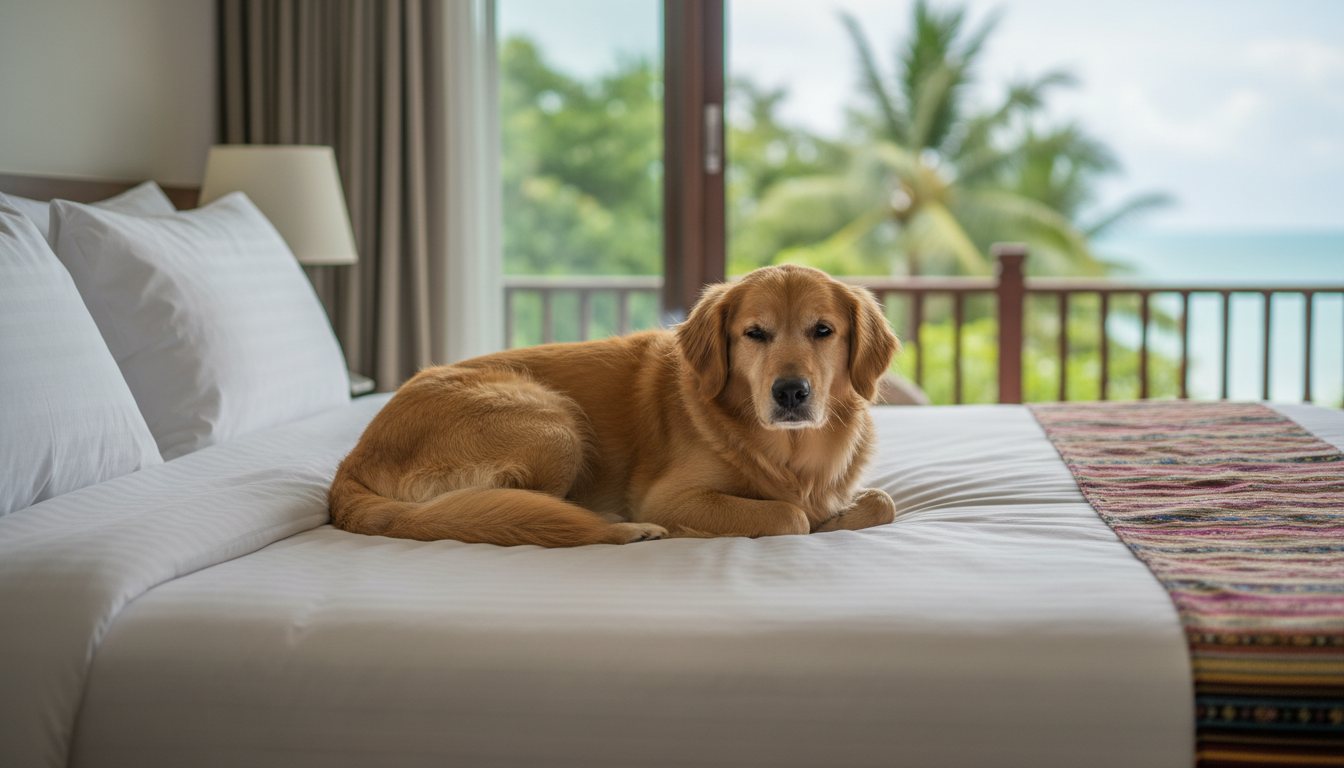
The pet-friendly travel scene in Thailand has grown tremendously, with many hotels, resorts, and guesthouses welcoming dogs. Destinations like Hua Hin, Cha-am, and Khao Yai are particularly famous for their pet-friendly accommodations, ranging from budget-friendly bungalows to five-star luxury resorts.
However, "pet-friendly" can mean different things at different properties. Some hotels allow dogs of all sizes, while others enforce strict weight limits (often under 10 kilograms). Many charge an additional pet fee per night or per stay, and these policies can change without notice.
Always contact the property directly before booking to confirm:
- Their current pet policy and weight restrictions.
- Any additional fees or cleaning deposits.
- Whether dogs are allowed in common areas, such as pool surrounds or outdoor dining spaces.
- If you need to bring your dog's own bedding and food bowls.
Essential Packing and Prep
Before you load up the car, take a moment to pack a dedicated dog travel kit. Having all your pet's essentials in one accessible bag will save you stress on the road.
Your dog's packing list should include:
- Their regular food and treats to avoid sudden dietary changes that could cause stomach upset.
- Bottled water from home or sealed bottles bought along the way to prevent digestive issues from unfamiliar water sources.
- A copy of their vaccination records, especially rabies certificates. If you are crossing provincial checkpoints or staying at registered resorts, you may be asked to show proof of up-to-date vaccinations.
- A basic pet first-aid kit containing bandages, antiseptic wipes, and tweezers for tick removal.
By taking the time to plan, secure your vehicle, and pack the essentials, you can ensure that your Thai road trip is a safe, memorable adventure for both you and your loyal companion.
This guide is general information, not veterinary or legal advice. Rules, fees and requirements change: check with your vet or the relevant authority before you act.
Written by
Boba
Part of the Wagdee community of pet lovers in Thailand.
Keep reading
 Travel with pets
14 June 2026 · 4 min read
Flying within Thailand with your pet
Planning a domestic flight with your dog or cat? Learn about airline policies, crate requirements, and essential health regulations to ensure a safe journey in Thailand.
 Travel with pets
10 June 2026 · 4 min read
Chiang Mai with Pets: Cafés, Parks, and Stays
Planning a trip to Northern Thailand with your pet? Discover dog-friendly cafés, community playparks, luxury resorts, and essential health tips for Chiang Mai's cool season.
 Travel with pets
6 June 2026 · 5 min read
Phuket with Your Dog: A Practical Guide to Island Life
Planning a trip to Phuket with your dog? Discover pet-friendly beaches, cozy Old Town cafés, luxury resorts, and practical safety tips for island life.